Guiyang.bai@honno-auto. com
86-13840589744
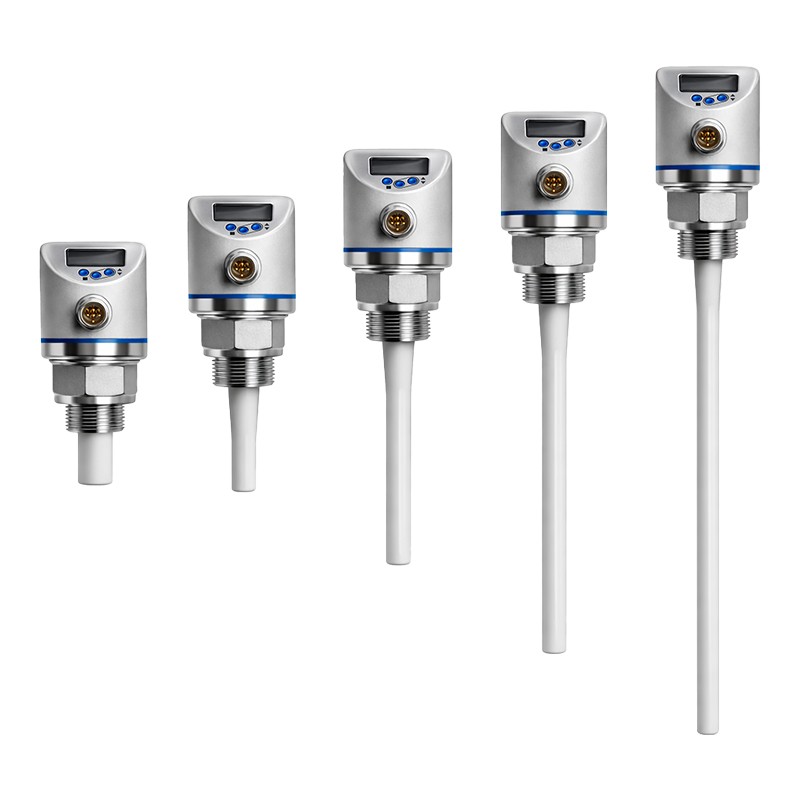
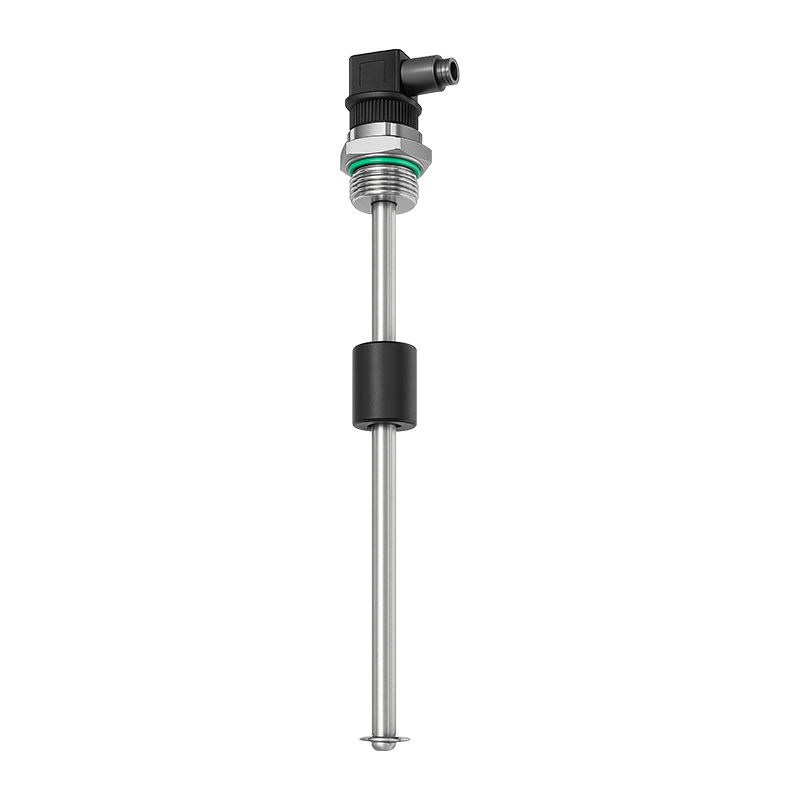
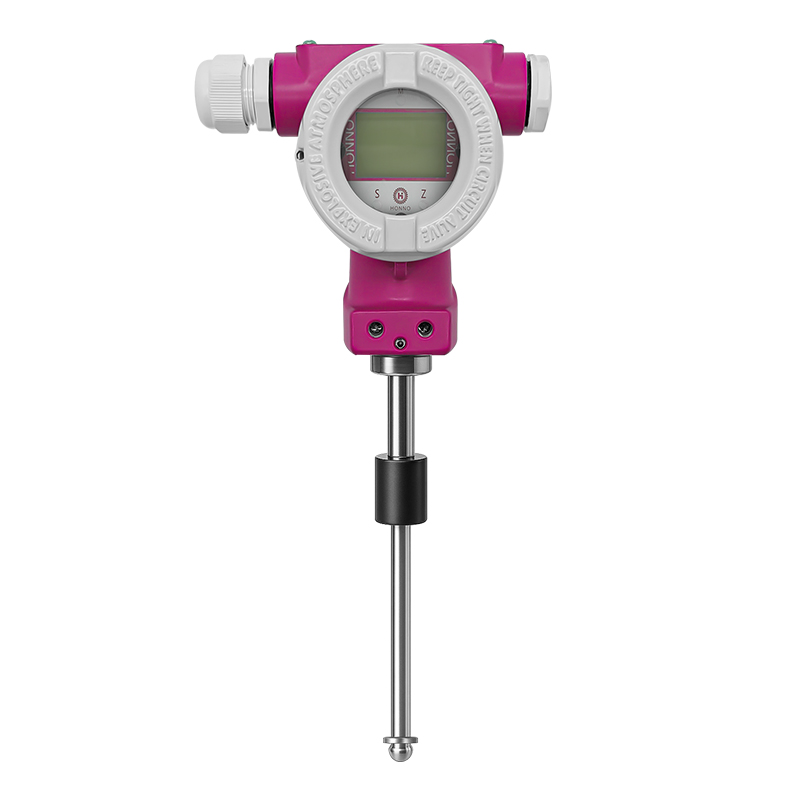
Capacitive liquid level sensor with RF admittance technology for continuous level and interface. PTFE/PFA probe, 4–20 mA two-wire, no blind zone.
The HNL60-B capacitive level transmitter uses the measured medium as the dielectric: the sensing rod detects the capacitance between the rod and the grounded tank wall. As material covers the rod, capacitance rises progressively; RF admittance technology converts capacitance to a voltage and the microprocessor outputs current and digital signals, so the material or liquid height is measured continuously. A 16-bit microprocessor and continuously adjustable sensitivity provide band measurement for liquids, solids, slurries and interfaces.
Suited to food and beverage processing, pharmaceutical production, detergent and chemical manufacturing, feed and grain processing, metallurgy and power plants, high-temperature and high-pressure vessels, strong acid and strong alkali storage, conductive and non-conductive liquids, slurries and viscous media, tanks containing steam and dust, overflow protection and high/low level alarm, pump control and dry-run protection.
Good fit: food and beverage, pharma, detergents and chemicals, feed and grain, metallurgy and power, high-temperature/high-pressure vessels, strong acid/alkali storage, conductive and non-conductive liquids, slurries and viscous media, steam/dust tanks, overflow and high/low alarm, pump control and dry-run protection.
Choose HNL60-B when:
You need continuous level or interface measurement (not a single point switch) on liquid, slurry, viscous material or solids.
The medium is conductive or non-conductive, and you need a coated probe for aggressive or sticky service.
You prefer two-wire 4–20 mA loop-powered transmission with on-site display and simple two-button calibration.
Confirm with us first when: the dielectric constant is very low, the tank is non-conductive and has no grounded reference, the probe length exceeds the rod/cable extension limit, or the process temperature or pressure is outside the selected type range.
The probe and conductive tank form a coaxial capacitor Cx; with h1 the level and h2 the gas-space height, Cx = k1·h1 + k2·h2. Because k1 > k2, Cx is linearly proportional to level h1, so probe capacitance change measures level. Buildup adds capacitance Cg and resistance Rg that would cause a false level; RF admittance processing reduces this effect, so light buildup barely affects accuracy.
| Model | HNL60-B — Capacitive / RF admittance level transmitter |
|---|---|
| Measured variable | Continuous liquid level, material level and interface |
| Capacitance range | 0–5000 pF (type table); generic configuration 20–2000 pF, max 2 m |
| Accuracy | ±1 % FS (25 ℃) per type; generic ±0.5 % FS or ±0.5 pF |
| Process pressure | 4.0 MPa per type; generic −1…40 bar (−100…4000 kPa) |
| Process temperature | Standard −40…80 ℃; high-temperature −40…200 ℃; acid-alkali variants −40…80 / 120 / 200 ℃; generic −40…120 ℃ |
| Ambient temperature | −20…60 ℃ (standard); −40…80 ℃ on high-temperature hammer type |
| Supply voltage | 24 VDC per type; generic 18–30 VDC |
| Signal output | Two-wire 4–20 mA; generic 4–20 mA / HART / PNP / NPN / RS485; manual variant 4–20 mA + 2 NPN/PNP, or 0–10 V + 2 NPN/PNP |
| Loop power | Two-wire 4–20 mA loop, low power, max 20 mA |
| Temperature drift | ≤0.2 % FS/℃ or 0.1 pF/℃ |
| Probe extension | Rod type max 5 m; cable (hammer) type max 25 m; hammer cable tensile strength 2000 kgf |
| Wetted parts | SUS304 / 316L; PTFE / PFA / PP / PVDF coating by type; junction box SUS304 |
| Protection rating | IP65 per type; generic IP66 / IP67 |
| Process connection | 1" PT or DN25 flange; 1/2" PT; M12 aviation plug on precision type; DN25 PN1.6 RF on acid-alkali type |
| Certifications | CE / ATEX / ISO9001 per configuration |
Several values vary by product type; confirm the final type and ratings with the factory before ordering.
| Type | Probe / hammer | Process temperature | Connection |
|---|---|---|---|
| Standard guide rod | SUS304 / 316L | −40…80 ℃ | 1" PT or DN25 flange |
| Standard guide rod, high-temperature | SUS304 / 316L | −40…200 ℃ | 1" PT or DN25 flange |
| Cable hammer type | Probe SUS304; hammer SUS304 | −40…80 ℃ | 1" PT or DN25 flange |
| Cable hammer, high-temperature | Probe SUS304; hammer SUS304 | −40…200 ℃ | 1" PT or DN25 flange |
| Fixed pendulum hammer | Probe SUS304; ceramic hammer | −40…80 ℃ | 1" PT or DN25 flange |
| Fixed pendulum, high-temperature | Probe SUS304; ceramic hammer | −40…200 ℃ | 1" PT or DN25 flange |
| Acid-alkali resistant guide rod | 304 coated PP / PFA / PVDF | −40…80 ℃ | DN25 PN1.6 RF |
| Acid-alkali guide rod, high-temperature | 304 coated PVDF / PTFE | −40…120 ℃ (PVDF) / −40…200 ℃ (PTFE) | DN25 PN1.6 RF |
| Acid-alkali resistant hammer | Probe SUS304 coated; hammer SUS304 + PTFE | −40…80 ℃ | 1" PT or DN25 flange |
| Acid-alkali hammer, high-temperature | Probe SUS304 + PP; hammer SUS304 + PTFE | −40…200 ℃ | 1" PT or DN25 flange |
| Precision guide rod | SUS304 / 316L; M12 aviation plug | −40…80 ℃ | 1" PT or DN25 flange |
| Acid-alkali precision guide rod | SUS304 + PP / PFA; M12 aviation plug SUS304 | −40…80 ℃ | 1" PT or DN25 flange |
For mixing tanks or dense foam, the coaxial CG-820 type is recommended to avoid splash, fluctuation and dense-foam false signals. A bypass pipe with valve can be used for maintenance without interrupting the main vessel.
M12 connector wiring per manual: BN pin 1 = L+, BU pin 3 = L−; BK pin 4 = PNP/NPN output; WH pin 2 and GR pin 5 provide the second switch or digital output on the five-pin variant. On the four-pin variant, WH pin 2 = OUT2, BK pin 4 = OUT1 (digital, current or voltage). Confirm output type and pinout with the selected configuration.
Non-conductive tank: fit a grounded metal conductive band outside the tank, or add a concentric metal tube around the probe with a vent hole at the top so the surface rises and falls freely.
Keep the electrode rod or steel cable parallel to the tank wall; do not place it too close to the wall or grounding rod, to avoid buildup between electrode and wall causing sensing errors.
Conductive medium: use PVDF, PP or PFA coated rod or cable; a bare electrode cannot work correctly in conductive material.
Fix thread or flange securely and check continuity between junction box and tank; poor grounding prevents correct detection.
Granular or powder media in large tanks: fix the cable to the tank bottom with an insulating insulator.
Avoid obstacles and agitators; with agitation, fix the sensing electrode to the wall with an insulating bracket so it cannot swing into the agitator. Tighten the box cover and cable gland after wiring to prevent moisture and short circuits.
Food, beverage, pharma, detergents, feed: process tanks and dosing systems.
Metallurgy, power, chemicals: high-temperature, high-pressure and strong acid/alkali vessels.
Difficult media: conductive/non-conductive liquids, slurries, viscous solids, steam and dust.
Control functions: real-time level monitoring, overflow protection, high/low alarm, pump control, dry-run prevention.
Send: medium and dielectric behavior (conductive/non-conductive), required probe length and tank geometry, process pressure and temperature, preferred output (4–20 mA / HART / PNP / NPN / RS485 / voltage), connection, coating requirement, and whether mixing or foam is present. We will confirm the type, coating and selection before quoting.
Does it provide continuous level output?
Yes. Unlike a point level switch, HNL60-B measures level continuously and transmits a 4–20 mA (or other selected) analog signal proportional to level, suitable for indicators, recorders, regulators and DCS inputs.
How does RF admittance compensate for probe coating in continuous slurry measurement?
RF admittance processing separates buildup capacitance and resistance from the probe signal, so light coating has minimal effect. For heavy sticky service choose a coated acid-alkali type matched to the medium.
Can rod or cable probes measure corrosive chemical tank levels?
Yes. Coated PP/PFA/PVDF/PTFE rods and acid-alkali hammer types are available. Send the chemical and concentration to match the coating; bare SUS304/316L is only for non-aggressive media.
Why is no blind zone useful for short process vessels?
The transmitter is designed with no measuring blind distance, so it can be applied to tanks and troughs of different heights, including short vessels where the lower end of the range must still be measured reliably.
What grounding arrangement ensures stable 4–20 mA transmission?
The junction box must have good continuity to the grounded tank. On a non-conductive tank, add a grounded metal band or concentric reference tube. A clean ground reference keeps the capacitance reading and 4–20 mA signal stable.
Send us the medium, probe length, pressure and temperature. We will confirm the type, coating and output before we quote.
Send us your application details »
Contact: HongNuo
Phone: 13840589744
Tel: 86-13840589744
Email: Guiyang.bai@honno-auto. com
Add: Zhongguancun Innovation Center, No. 28 Huahai Road, Shenyang Economic and Technological Development Zone, Liaoning Province
We chat