


Guiyang.bai@honno-auto. com
86-13840589744
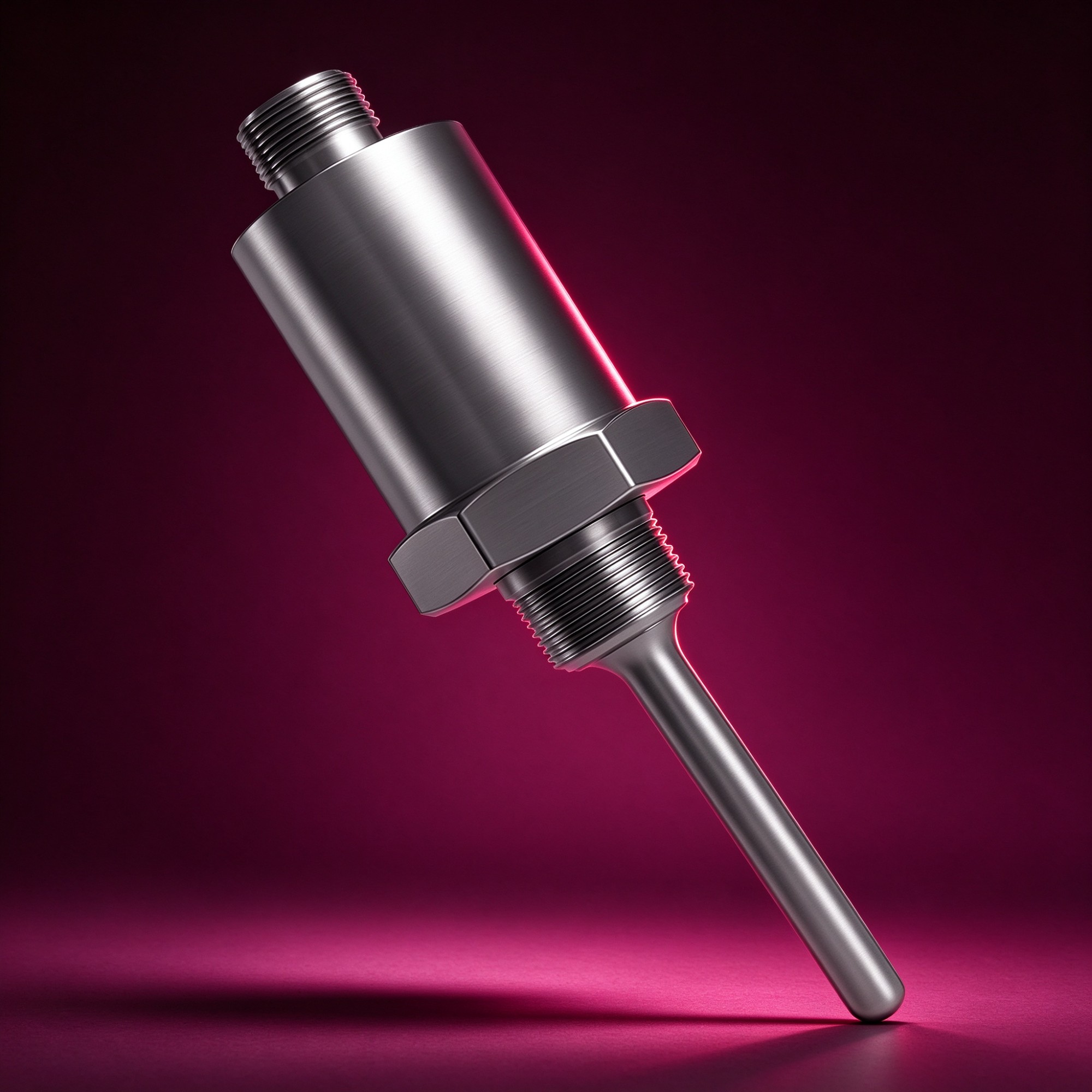
HNT10 compact cylindrical Pt100 RTD temperature transmitter with integrated 4-20mA output, M12 connector, 304/316 stainless probe, -50…300°C, IP65, threaded or chuck mount for industrial water, steam, gas and OEM machinery.
The HNT10 is a compact, cylindrical Pt100 RTD temperature sensor with an integrated 4–20 mA transmitter, built to screw directly into liquid, steam or gas process lines. A platinum sensing element changes resistance linearly with temperature per IEC 60751, and the onboard electronics convert that resistance into a standard two-wire current signal that drops straight into PLC, indicator, recorder or controller loops. A 304/316 stainless protective sleeve gives the mechanical strength and corrosion resistance required on the factory floor, while the cylindrical form factor fits where a bulky connection-head transmitter will not.
HNT10 is made for compact process pipes, OEM skids and machine-mounted temperature points where a classic connection-head RTD will not clear the wall, insulation or adjacent equipment. The transmitter electronics live inside the cylindrical sleeve itself, so a twisted pair carries a noise-immune 4–20 mA signal directly to the PLC — no separate head transmitter, no millivolt signal drifting over long runs.
It covers media from clean water and steam to gases and fixed surface temperatures, with a stainless protective tube rated up to 20 MPa and a choice of threaded or chuck mounting.
Good fit: compact process pipes, OEM machinery and skids, water / steam / gas lines, power-plant auxiliary circuits, chemical and steel-mill utility loops, ship and engine-room points, 24 VDC 4–20 mA PLC integration, IP65 wash-down areas.
Choose HNT10 when all of the following hold:
Measuring range within −50…300 °C (standard −50…100 °C; high/low-temperature −50…300 °C; sanitary −50…100 °C).
The medium is clean or mildly aggressive liquid, steam, gas, or a fixed metal surface — not strong acids, chlorides or aggressive chemicals.
You can insert the probe at least 5× its outer diameter into the process (Ø6 → ≥30 mm, Ø8 → ≥40 mm immersion).
You want a two-wire 4–20 mA output on 12…30 VDC into a PLC analog card, panel meter or recorder.
The port on the pipe takes a British (G), metric (M) thread, or a chuck (clamp) connection; HNT10 has no flange version.
Process pressure stays inside 40 bar (Ø6 probe) or 100 / 200 bar (Ø8 probe); overall working pressure below 20 MPa.
Confirm the application with us before ordering when the medium is strongly corrosive (use HNT60 PFA/PTFE probe), the process temperature exceeds 300 °C (use HNT30 armored thermocouple), HART / Modbus / RS485 digital bus is required (use HNT40 smart transmitter), or the area is hazardous / Ex-rated (use HNT40 Ex d IIC T6).
The transmitter electronics sit inside the cylindrical sleeve, so the sensor screws through a standard G1/4 or M10 port where a connection-head RTD would not clear the pipe wall, insulation or adjacent equipment.
A bare Pt100 millivolt signal drifts over long cable runs and needs an external head transmitter. HNT10 ships with the transmitter onboard — a shielded pair carries a loop-signal straight into the PLC analog card.
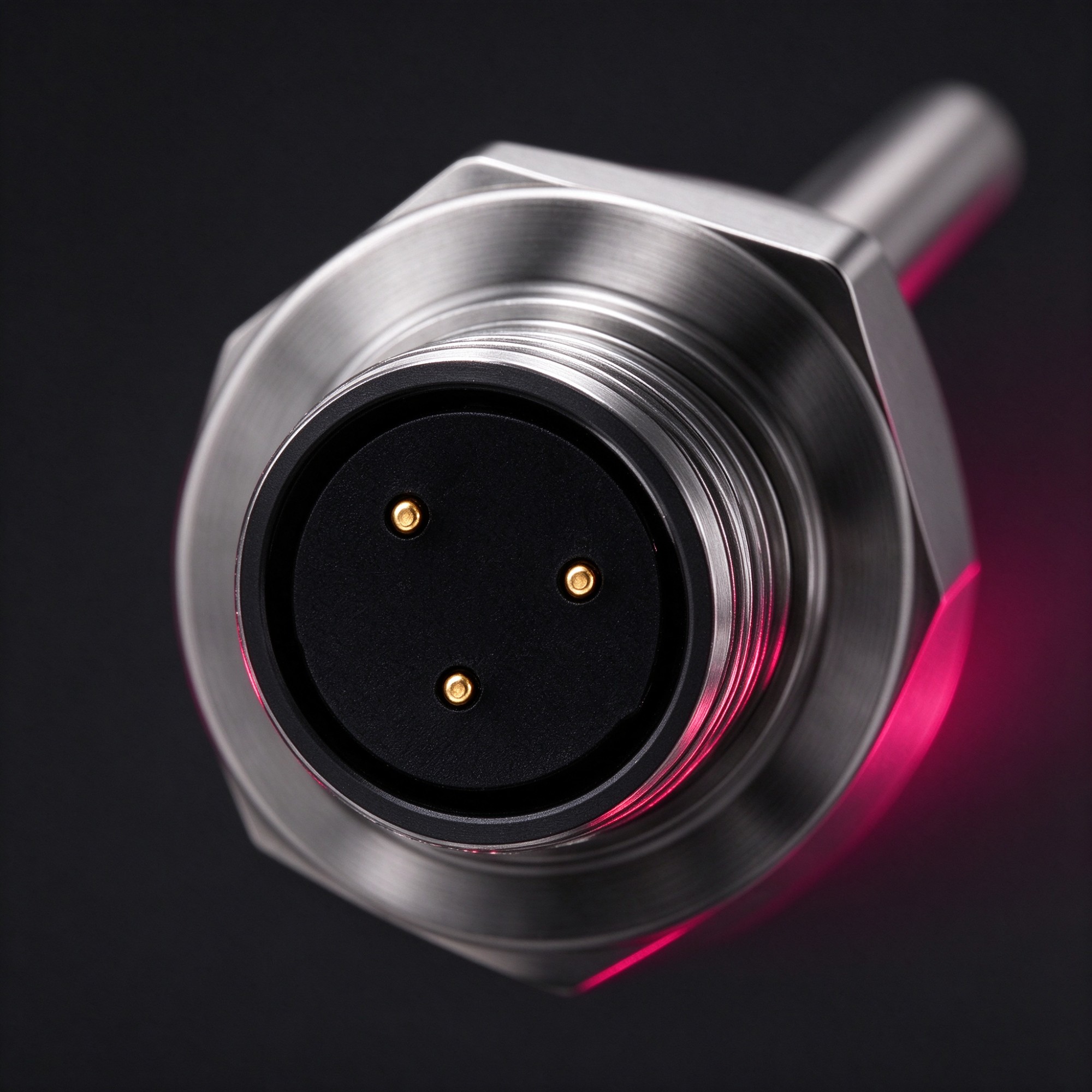
The M12 connector lets maintenance unplug and swap the sensor without rewiring terminals. This matters on OEM machines that are pre-wired at the factory and shipped with harnesses.
IEC 60751 Class A tolerance of ±(0.15 + 0.002|t|) °C is tighter than Class B and far tighter than the generic NTC thermistors used in low-cost machine sensors — it holds up in closed-loop temperature control, not just rough indication.
| Model | HNT10 — Cylindrical Pt100 Temperature Transmitter |
|---|---|
| Sensing element | Pt100 platinum RTD, per IEC 60751 (IEC 584); Class A or Class B on order |
| Measuring range | −50…300 °C overall. Standard −50…100 °C; high/low-temp −50…300 °C; sanitary −50…100 °C. Write your range directly on the order, e.g. 0–100 °C. |
| Element accuracy | Class A: ±(0.15 + 0.002|t|) °C; R0 = 100 ± 0.06 Ω, R100 = 138.512 ± 0.06 Ω. Class B: ±(0.30 + 0.005|t|) °C; R0 = 100 ± 0.12 Ω, R100 = 138.512 ± 0.12 Ω. |
| Transmitter accuracy | ±0.2 K + ±0.5 %FS; resolution 0.1 K; linearity <0.1 %FS; temperature influence 0.1 K / 10 K |
| Thermal response time | τ0.5 < 5 s; typical 2.3 s |
| Probe outer diameter | Ø6 mm or Ø8 mm stainless protective tube |
| Probe length L | 25 / 50 / 80 / 100 mm standard; other lengths made to order |
| Wetted / housing material | Probe rod 304 or 316 stainless steel; stainless-steel shell |
| Process pressure | Ø6: 40 bar. Ø8: 100 bar (standard) or 200 bar (high-pressure). Maximum working pressure < 20 MPa. |
| Minimum insertion depth | > 5 × probe outer diameter (D) |
| Insulation resistance | ≥ 100 MΩ for probe < 1000 mm; ≥ 100 MΩ·m above 1000 mm (tested at 500 VDC, 15–35 °C, 45–75 % RH) |
| Output signal | 4–20 mA, two-wire |
| Supply voltage | 12…30 VDC |
| Electrical connection | M12 connector — Pin 1: 24 VDC; Pin 2: 4–20 mA analog signal |
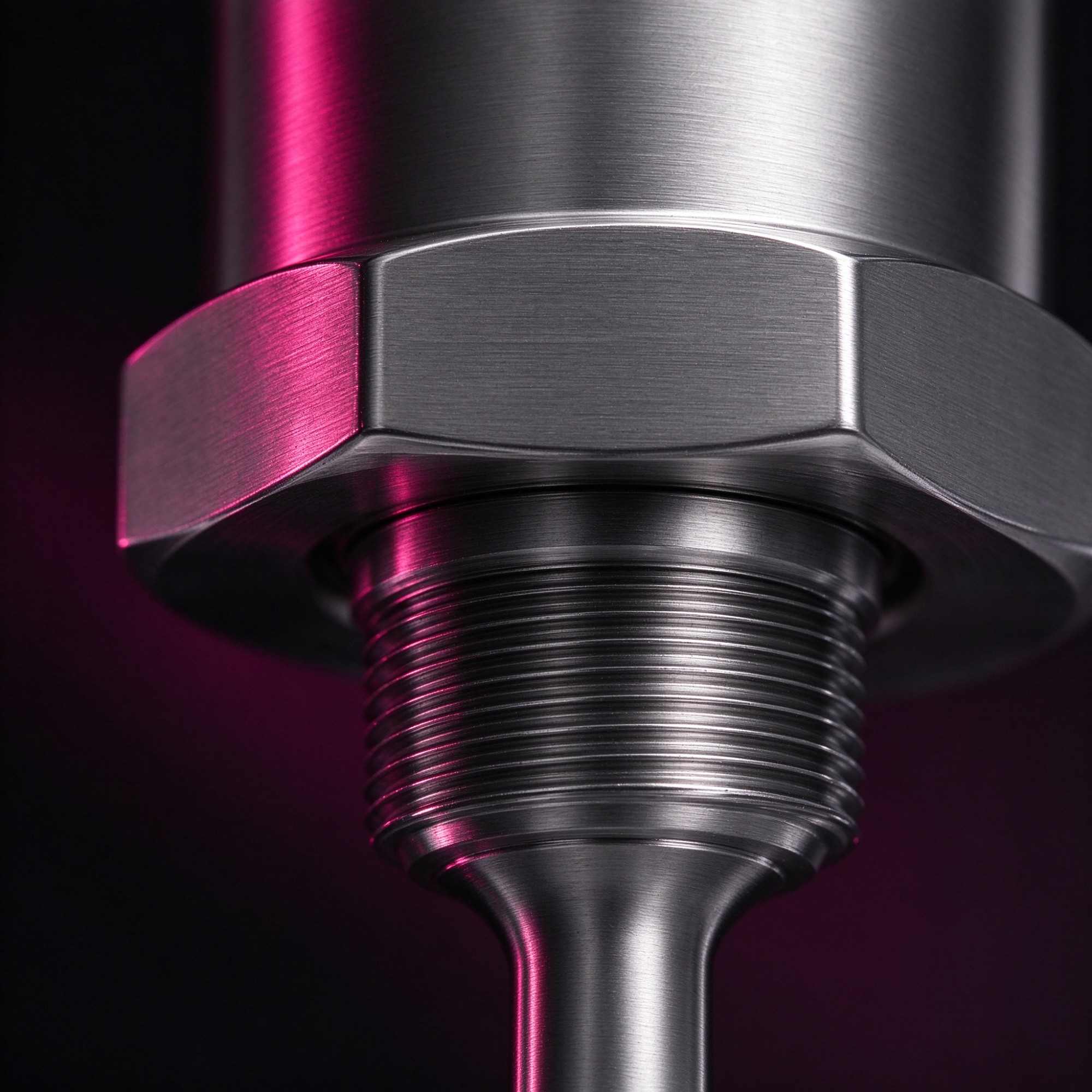
| Mechanical connection | British thread (G), metric thread (M), or chuck / clamp (K) |
| Ambient temperature | −25…75 °C |
| Protection rating | IP65 |
| Ordering code example | HNT10 – A / 0–100 °C / L50 / A8 / G / M |
Confirm these four items before ordering:
Process temperature range — write it directly on the order, e.g. 0–100 °C or 0–150 °C.
Probe length L — verify it satisfies the >5D insertion rule inside the pipe or tank.
Thread standard and size — G (British), M (metric), or K (chuck), with the size available on the port.
Probe diameter and wetted material — Ø6 (≤40 bar) or Ø8 (100 / 200 bar); 304 or 316 stainless.
On site, insert the probe so its tip reaches at least 5× the OD into the fluid; on small-bore pipes, angle-mount or extend with a thermowell. Tighten the fitting with a wrench on the hex — never turn the probe rod itself. Point the M12 cable gland downwards in wash-down areas. On power-up, allow 2–3 minutes for the reading to settle, then compare against a reference thermometer or the plant trend at a known process temperature before closing the loop.
Pin 2 (4–20 mA) → PLC analog input card, digital panel meter, paperless recorder or PID controller.
Pin 1 (+24 VDC) → standard 24 VDC sensor supply; two-wire loop, no separate signal return.
Shielded cable → ground the shield at the cabinet end only, to avoid earth loops.
For OEM / skid / control-panel enquiries, send us the pipe OD and wall, process medium, expected min/max temperature, available thread size, PLC analog input type, and cable run length. We will confirm Class A vs Class B, probe length and wetted material before we quote.
Lube-oil, bearing and cooling-water temperature on pumps, fans and heat-exchanger skids where a compact screw-in probe beats a bulky head assembly.
Non-aggressive cooling circuits, wash-water and CIP return lines — 316 wetted parts handle mild process water and condensate.
Rolling-mill coolant, hydraulic power-unit and quench-tank monitoring in tight machine spaces.
Engine-room jacket-water, fuel-oil and auxiliary-line temperature points on compact marine skids.
Chillers, compressors, welders and test rigs where the M12 connector pre-wires cleanly into the machine harness.
Send the following with your enquiry: process medium, expected temperature range, available thread size on the pipe, required probe length, process pressure, output signal (4–20 mA is standard), cable length, and whether 304 or 316 stainless wetted parts are needed. For unknown media, high-cyclic pressures or sanitary duties, we may ask for a sample or a short process datasheet before confirming the final order code.
How accurate is the HNT10 Pt100 sensor?
Element accuracy follows IEC 60751: Class A is ±(0.15 + 0.002|t|) °C and Class B is ±(0.30 + 0.005|t|) °C. The onboard transmitter adds ±0.2 K + ±0.5 %FS, giving 0.1 K resolution and <0.1 %FS linearity.
Which Pt100 class should I choose — A or B?
Choose Class A for closed-loop control, metering and tight process monitoring (≈±0.35 °C at 100 °C). Choose Class B for general indication, alarms and machine protection where ±0.8 °C at 100 °C is acceptable.
How deep should the probe go into the pipe?
At least 5× the probe outer diameter: ≥30 mm for Ø6 and ≥40 mm for Ø8. On small-bore pipes, angle-mount the fitting or extend the probe into a thermowell so the tip crosses the pipe axis.
Can I wire HNT10 straight into a PLC analog card?
Yes. It is a two-wire 4–20 mA loop on 12…30 VDC: Pin 1 to +24 V, Pin 2 to the analog input. No external transmitter head and no RTD input card required.
What pressure can the M12 probe really take?
The Ø6 protective tube is rated to 40 bar; the Ø8 tube to 100 bar standard or 200 bar in the high-pressure version. Overall working pressure must stay below 20 MPa — confirm before ordering if you are close to these limits.
HNT10 Cylindrical Pt100 Temperature Sensor Datasheet (PDF)
Send us the pipe thread size, medium, temperature range, pressure and required output. We will confirm whether HNT10 fits, recommend Class A / Class B and the right probe length, and send a selection note before we quote.
Send us your application details »
Contact: HongNuo
Phone: 13840589744
Tel: 86-13840589744
Email: Guiyang.bai@honno-auto. com
Add: Zhongguancun Innovation Center, No. 28 Huahai Road, Shenyang Economic and Technological Development Zone, Liaoning Province
We chat
