
Guiyang.bai@honno-auto. com
86-13840589744
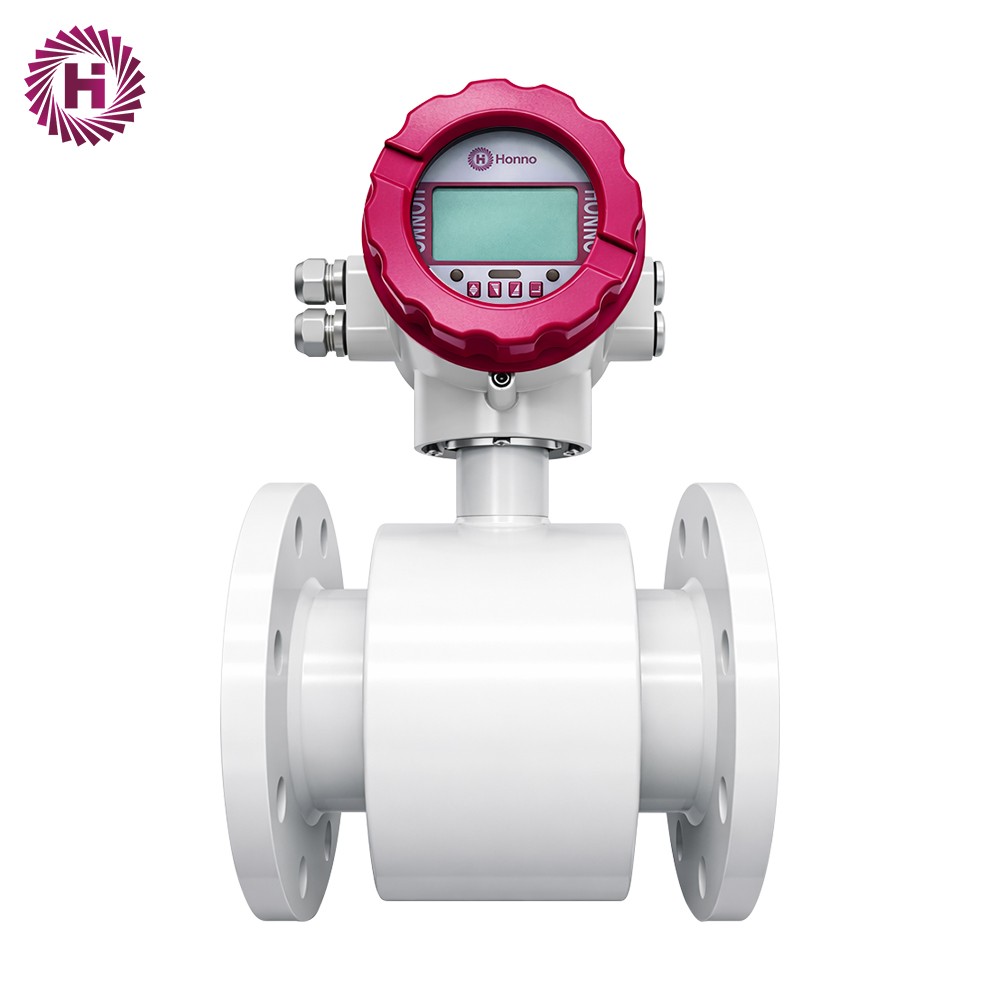
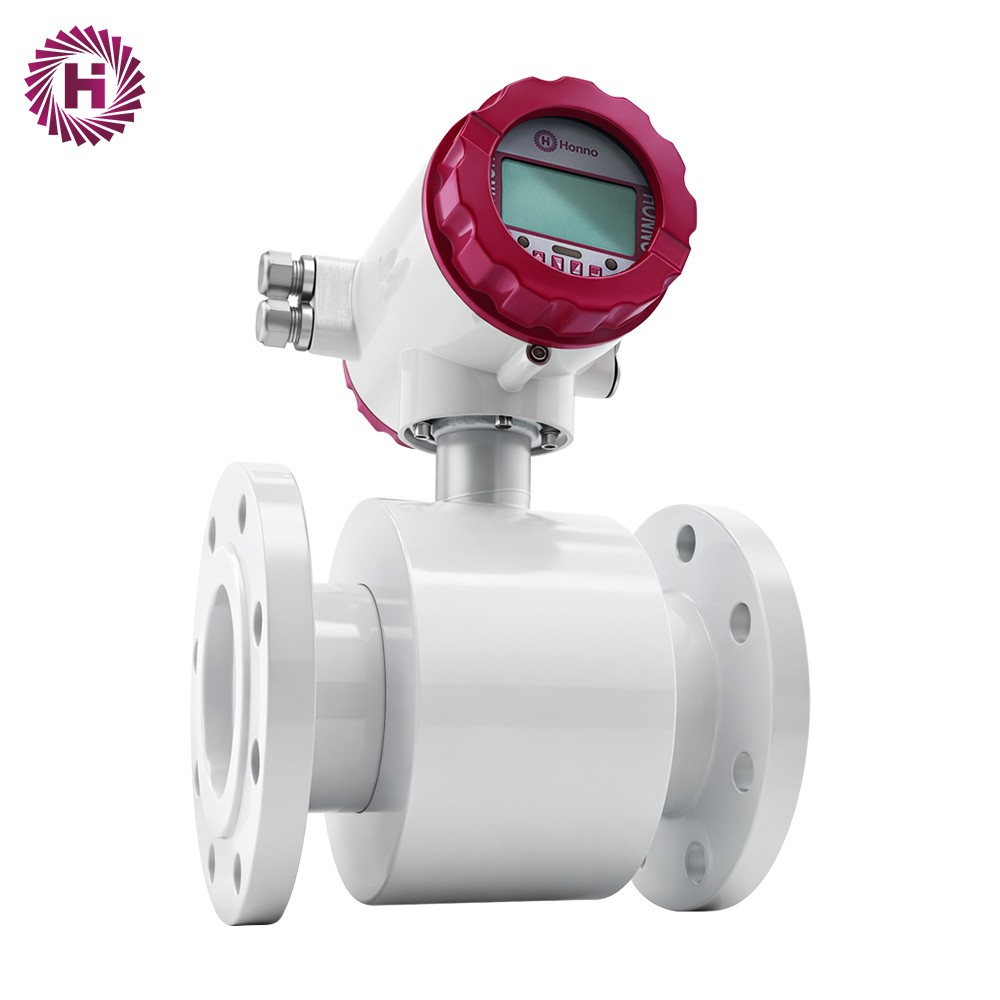
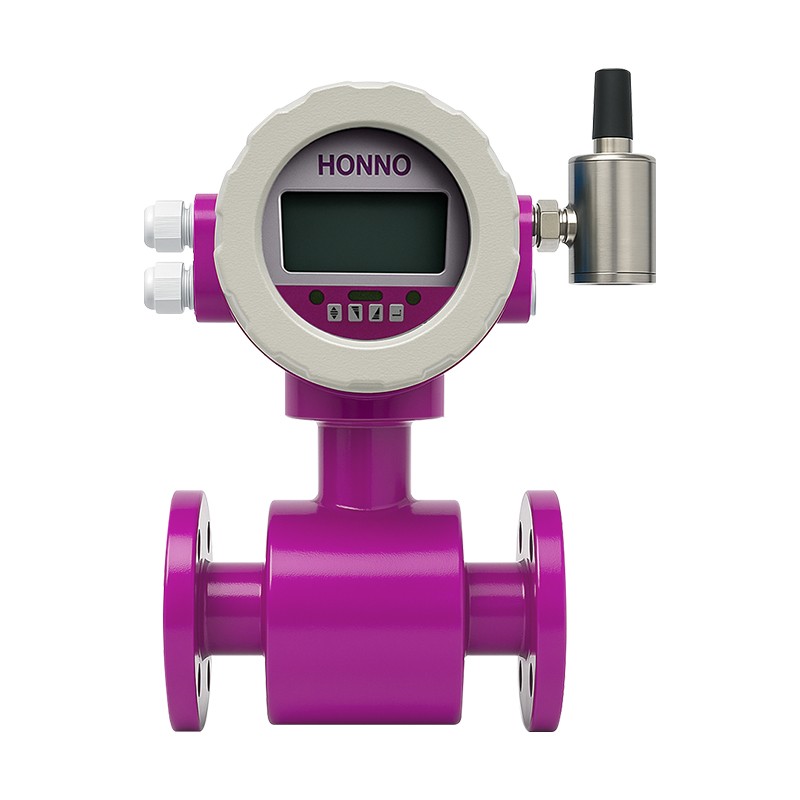
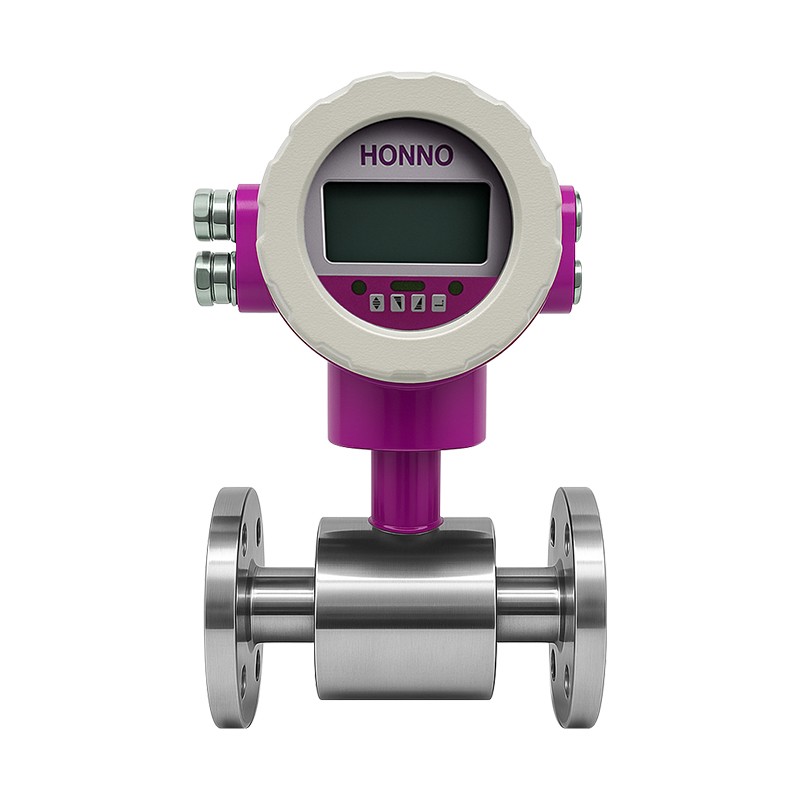
Mag meter for conductive liquids above 5 µS/cm and slurries. DN10–DN3000, ±0.25% FS, no pressure loss, IP65/68, Ex d IIC.
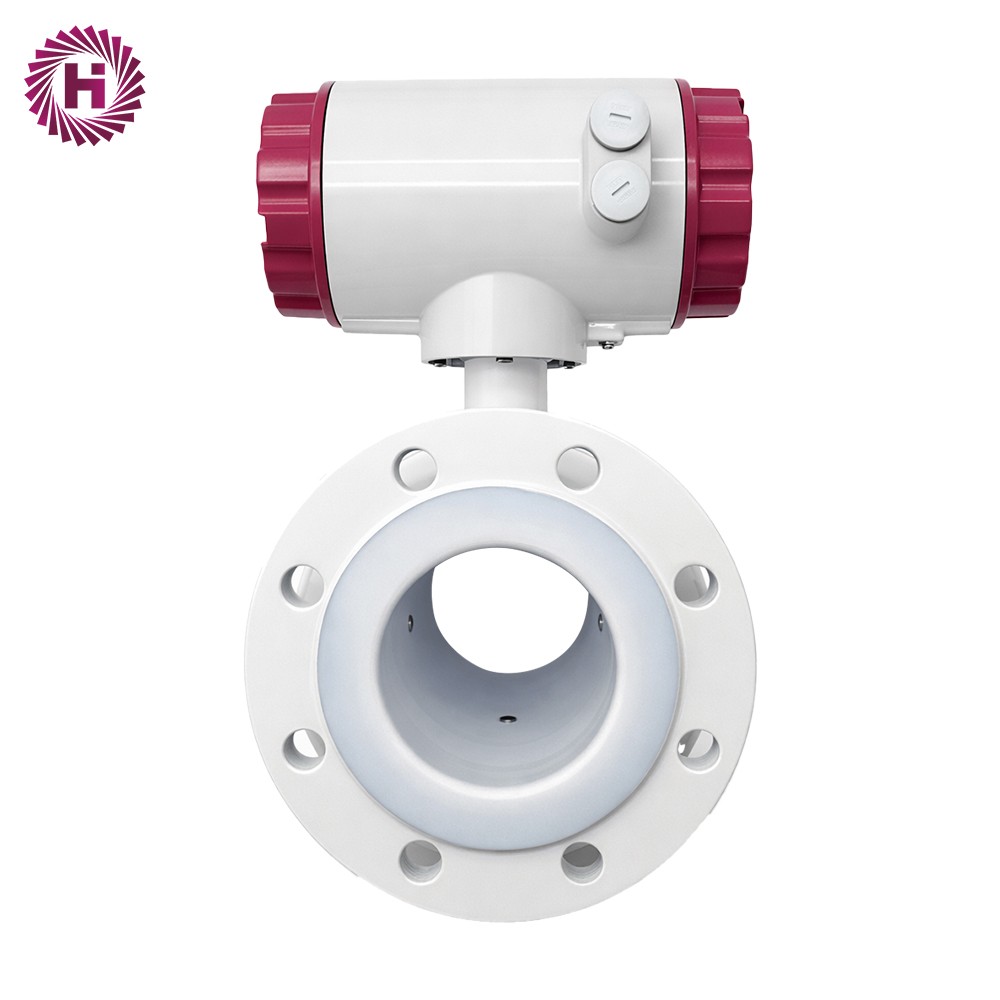
The HNF60 intelligent electromagnetic flow meter (mag meter) consists of a sensor and a converter. Working on Faraday's law of electromagnetic induction, it measures the volumetric flow rate of conductive liquids with conductivity above 5 µS/cm. Besides general conductive liquids, it handles strongly corrosive fluids such as strong acids and alkalis, and uniform liquid–solid two-phase suspensions such as mud, slurry and pulp — the medium must not contain large amounts of ferromagnetic substances or bubbles. With no obstruction components or moving parts inside the measuring tube, there is no pressure loss, no wear and a long sensor life; all-digital processing gives strong anti-interference, reliable and high-accuracy readings.
The meter suits acids, alkalis, salts, mud, slurry and pulp; the digital LCD shows instantaneous and cumulative volume, and the output can drive a PLC directly. Integrated, split (remote), clamping and insertion versions are available.
Good fit: petrochemical, electric power, metallurgy, textile, papermaking, environmental protection, food & pharmaceutical, municipal water supply and management, water conservancy construction, river dredging, sewage and wastewater treatment, mud/slurry/pulp measurement, acid and alkali dosing, chemical process lines, pulp and paper stock flow.
Choose HNF60 when:
The liquid is conductive (above 5 µS/cm; softened water about 20 µS/cm) and you need volumetric flow with no pressure loss.
The medium is corrosive, abrasive or a uniform slurry/pulp, and electrode/lining materials can be matched to it.
You need 4–20 mA, pulse, HART, RS232 or RS485 output to a PLC, with integrated or remote converter.
Confirm with us first when: the medium contains ferromagnetic particles or many bubbles, conductivity is near the limit, the medium temperature exceeds the lining rating, or a large diameter beyond the standard range is required.
On Faraday's law, a magnetic field across the measuring tube induces a voltage proportional to average flow velocity in the conductive liquid. Two electrodes sense this voltage; the converter digitises it and computes volumetric flow from velocity and bore. Three-amplitude low-frequency rectangular-wave and high-frequency excitation at 160 mA stabilises the signal against slurry and low-conductivity effects; power consumption is below 20 W.
| Model | HNF60 — Intelligent electromagnetic flow meter |
|---|---|
| Measurement medium | Conductive liquid, conductivity >5 µS/cm (softened water 20 µS/cm); compatible with the selected contact material; no large amounts of ferromagnetic substances or bubbles |
| Accuracy | ≤±0.25 % FS typical; ≤±0.5 % FS highest (including nonlinearity, hysteresis and repeatability) |
| Nonlinearity (BFSL) | ≤±0.3 % FS |
| Hysteresis / repeatability | ≤±0.1 % FS |
| Thermal drift | Zero and full range ≤±0.1 % FS/10K typical, ≤±0.2 % FS/10K maximum |
| Response time | <40 ms typical |
| Flow velocity range | 0.1–15 m/s |
| Nominal size | DN10–DN3000 (see selection table and range table; other sizes on request) |
| Pressure rating | 1.6 MPa standard; 2.5 MPa option (see selection code) |
| Excitation | Three-amplitude low-frequency rectangular-wave and high-frequency excitation; exciting current 160 mA; power consumption <20 W |
| Output signal | 4–20 mA (short-circuit protected), pulse 0–1 kHz, HART, RS232, RS485 |
| Supply voltage | 220 VAC ±10 %; 24 VDC ±10 %; 3.6 V lithium battery (polarity protected) |
| Current limit / load | 28 mA typical; load RL ≤ (UB − 1 V)/0.02 A [Ω] |
| Electrical connection | Terminal wiring, M20×1.5 interface |
| Housing material | Cast aluminium alloy |
| Electrode material | 316L, Hastelloy B, Hastelloy C, tantalum, platinum, tungsten carbide |
| Lining material | Chloroprene rubber (CR), polyurethane (PUR), PTFE (F4), F46, PFA |
| Body / flange | Carbon steel standard; stainless steel on request |
| Grounding | Grounding ring (user specified) or grounding electrode; pipeline grounding |
| Sensor temperature | −20…90 / 130 / 180 ℃ depending on lining |
| Ambient temperature | Sensor −40…80 ℃; converter −25…70 ℃; storage −40…85 ℃; humidity ≤85 % RH |
| Explosion protection | Ex d IIC T2…6 |
| Protection class | IP65 / IP68 (with matching connectors) |
| EMC | EN 61000-6-3 emission; EN 61000-6-2 immunity (RF field 10 V/m, 26 MHz–2 GHz, deviation <2 % FS) |
| Insulation impedance | >100 MΩ at 100 V |
| Nominal size | Range (m³/h) | Nominal size | Range (m³/h) |
|---|---|---|---|
| DN15 | 0.4–3.2 | DN150 | 32–320 |
| DN25 | 1.0–10 | DN200 | 50–500 |
| DN40 | 2.5–25 | DN300 | 120–1200 |
| DN50 | 3.6–36 | DN500 | 350–3500 |
| DN80 | 9–90 | DN1000 | 1400–14,000 |
| DN100 | 14–140 | DN2000 | 5600–56,000 |
Full DN15–DN2000 range table is in the datasheet. Select the meter by the flow velocity; if the meter bore does not match the process pipeline, use a reducer or expander.
| Code segment | Code | Description |
|---|---|---|
| Type | A | Integrated type |
| B | Clamping type | |
| C | Split (remote) type | |
| D | Insertion type | |
| Nominal size | 10…300 | DN10, 15, 20, 25, 32, 40, 50, 65, 80, 100, 125, 150, 200, 250, 300 |
| X | Write the caliber directly after X, max 2200 mm | |
| Accuracy class | A | 1 % FS |
| B | 0.5 % FS | |
| Output | M | 4–20 mA |
| HM | 4–20 mA with HART | |
| T | Pulse output | |
| R2 | RS232 output | |
| R4 | RS485 output | |
| Electrode material | L | 316L stainless steel |
| HB | Hastelloy B | |
| HC | Hastelloy C | |
| T | Tantalum | |
| B | Platinum | |
| W | Tungsten carbide | |
| Lining material | 1 | Chloroprene rubber CR |
| 2 | Polyurethane rubber PUR | |
| 3 | PTFE F4 | |
| 4 | F46 (perfluoroalkoxy) | |
| 5 | PFA | |
| Shell material | A01 | Carbon steel |
| A02 | Stainless steel | |
| Grounding method | 1 | Grounding electrode |
| 2 | Grounding ring | |
| Pressure rating | A | 1.6 MPa |
| B | 2.5 MPa | |
| Supply voltage | 1 | DC 24 V |
| 2 | AC 220 V | |
| 3 | 3.6 V lithium battery | |
| Explosion-proof | A | Non-explosion-proof |
| B | Explosion-proof type |
Keep the measuring tube full of liquid; avoid air entrainment and mounting in high points where gas can collect.
Ensure proper grounding: grounding electrode, grounding ring or pipeline grounding as selected; poor grounding is a common source of unstable readings.
Match electrode and lining to the medium — PTFE/F46/PFA for strong acids, PUR for abrasive slurry, Hastelloy/tantalum/platinum for aggressive service.
Respect the lining-specific sensor temperature range and keep the converter within its ambient range.
Water and wastewater: municipal water supply and management, water conservancy, river dredging, sewage and wastewater treatment.
Process industry: petrochemical, electric power, metallurgy, textile, papermaking, chemical process lines, acid and alkali dosing.
Slurry and stock: mud, slurry, pulp, pulp and paper stock flow, uniform liquid–solid two-phase suspensions.
Food and pharmaceutical: conductive process liquids where sanitary or corrosion-resistant construction is required.
Send: liquid name and conductivity, expected flow range and normal velocity, nominal size and pipeline bore, required output, supply, electrode and lining materials, pressure and temperature, integrated or remote type, and whether explosion-proof or sanitary construction is needed. We will confirm the size and selection code before quoting.
Which conductive liquids can the mag meter measure?
It measures conductive liquids above 5 µS/cm (softened water about 20 µS/cm), including water, acids, alkalis and salts, plus uniform slurry and pulp. The medium must not contain large amounts of ferromagnetic substances or bubbles.
Can it handle uniform slurry or pulp?
Yes. Uniform liquid–solid two-phase suspensions such as mud, slurry and pulp are within scope; choose polyurethane or an abrasion-resistant lining and a suitable electrode for abrasive service.
Does the full-bore tube cause pressure loss?
No. There are no obstruction components or moving parts inside the measuring tube, so the meter causes no pressure loss and has little wear, with a long sensor service life.
How does conductivity above 5 µS/cm affect selection and operation?
The induced voltage needs a conductive path; below about 5 µS/cm the signal becomes unreliable. Confirm actual conductivity and temperature, and match the electrode/lining accordingly; near the limit, contact us before ordering.
What electrode and lining combinations suit strong acids or abrasive media?
For strong acids choose PTFE/F46/PFA lining with Hastelloy, tantalum or platinum electrodes; for abrasive slurry choose polyurethane lining with 316L or tungsten carbide electrodes. Send the chemical, concentration and solids content to confirm the combination.
HNF60 Electromagnetic Flow Meter Datasheet (PDF) — view all product manuals on our Download page »
Send us the liquid, conductivity, flow range and size. We will confirm the selection code before we quote.
Send us your application details »
Contact: HongNuo
Phone: 13840589744
Tel: 86-13840589744
Email: Guiyang.bai@honno-auto. com
Add: Zhongguancun Innovation Center, No. 28 Huahai Road, Shenyang Economic and Technological Development Zone, Liaoning Province
We chat