Guiyang.bai@honno-auto. com
86-13840589744
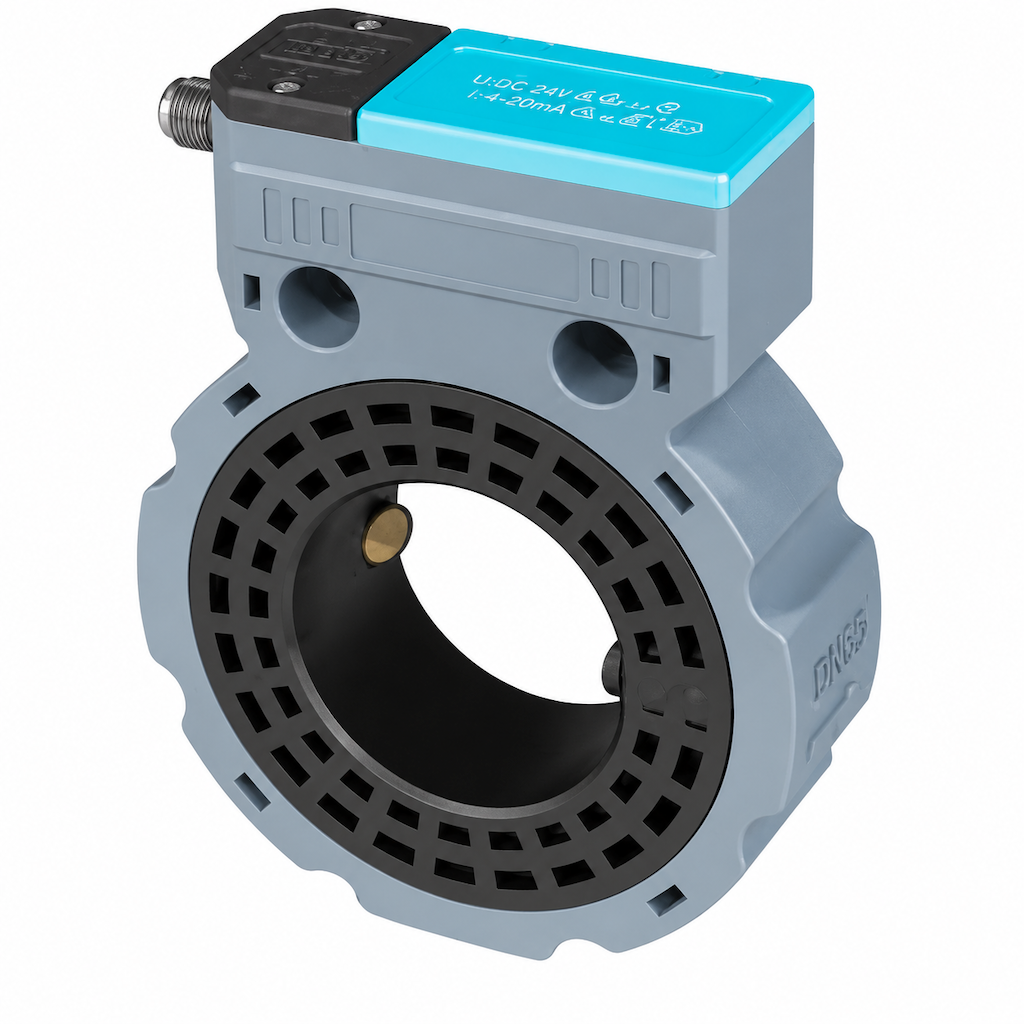
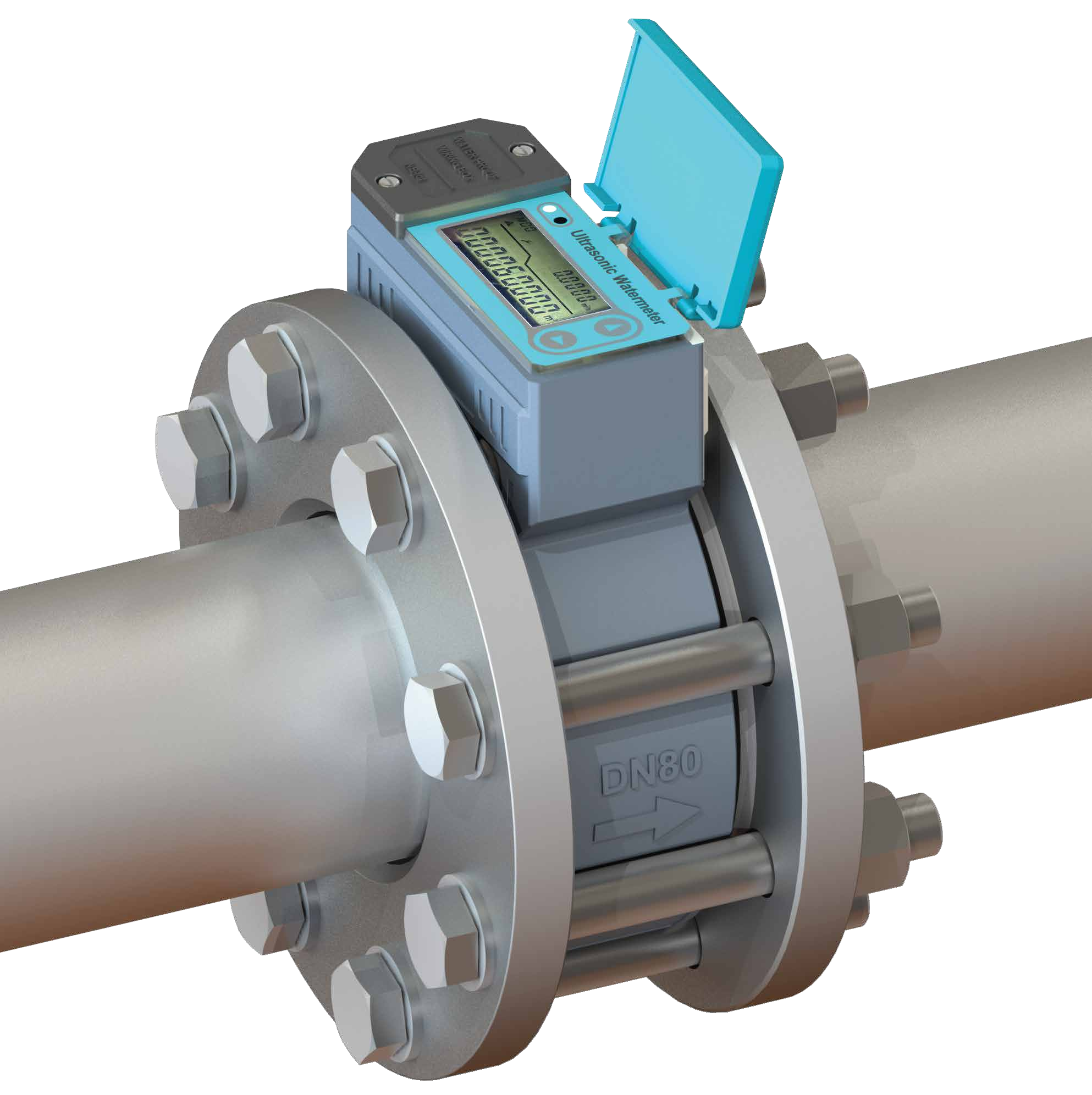
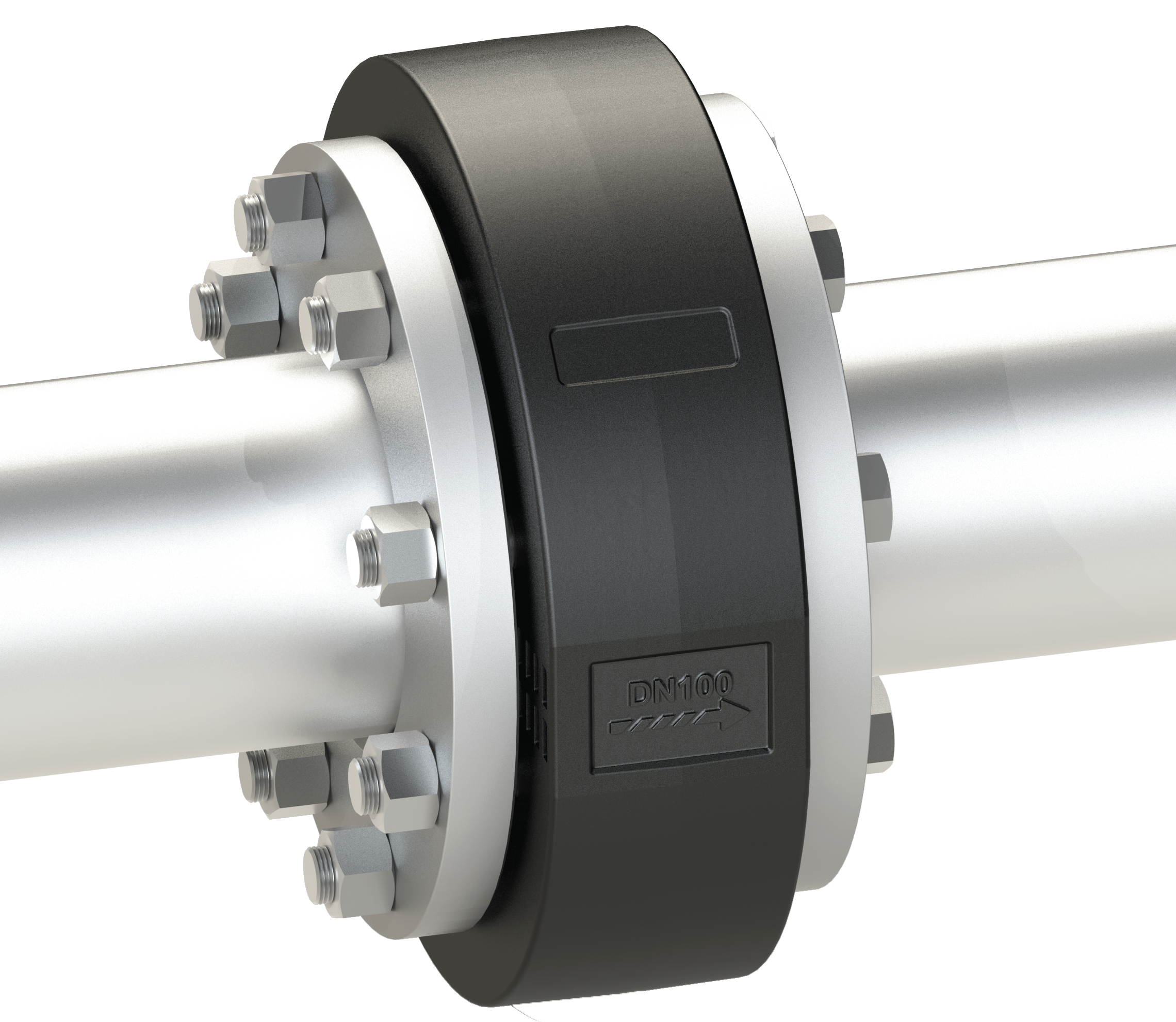
HNF140-A is a card-type ultrasonic water meter built to ISO 4064-2014 and GB/T 778-2018 for agricultural irrigation, landscaping management and water-resource monitoring. The body is shaped like a card and only 50.8 mm thick, installed between two flanges, which frees up space in narrow pits, valve chambers and irrigation branches. Every part is IP68, so it runs submerged, silted or in the open; transit-time measurement brings no rotating or wearing parts, with class 2 accuracy and a range ratio of R100 covering small flows and peaks. Sizes are DN50–DN150, fluid temperature 0.1–30 ℃, and the LCD shows total and instantaneous flow together. An internal 3.6 V lithium battery lasts over six years, with DC 8–24 V as an alternative; RS485 and infrared are standard, with optional M-BUS, 4-20 mA, 4G, NB-IoT, RF and Bluetooth modules, plus an optional protective cover against probe damage and tampering.
HNF140-A is a card-type ultrasonic water meter designed for agricultural irrigation, landscaping management and water-resource monitoring, built to ISO 4064-2014 and GB/T 778-2018. Its defining feature is the body itself: shaped like a card and only 50.8 mm thick, it installs between two flanges and frees up space in pits, valve chambers and irrigation branches that were never sized for a conventional meter. Every part is IP68, so it keeps working when submerged, silted up or exposed to the weather. Measurement is ultrasonic transit-time with no rotating or wearing parts, giving class 2 accuracy and a range ratio of R100 that still registers small flows as well as peaks. Sizes are DN50–DN150, fluid temperature 0.1–30 ℃, and the LCD shows total and flow rate together. An internal 3.6 V lithium battery runs for more than six years, with DC 8–24 V as an alternative; RS485 and infrared are standard, with optional M-BUS, 4-20 mA, 4G / NB-IoT, RF and Bluetooth modules, plus an optional protective cover against probe damage and tampering.
Most irrigation metering points were never designed around a standard meter: pits are shallow, valve chambers are crowded with fittings, and branch pipes run close to the ground, while a conventional meter with its register is often 200 to 300 mm thick. Fitting one means either the lid will not close or the pipe has to be raised. The card design compresses the body to 50.8 mm, so the measuring section is just the short piece between two flanges; tighten the bolts and the installation is done, with no extra space and no on-site commissioning.
Thin does not mean weak. The body is a fully sealed unit with IP68 protection throughout, so flooding, silt and open-air exposure do not disturb the measurement; the transit-time principle means there is no impeller or moving part inside, so grit cannot jam it and wear cannot drag the reading down over the years. For irrigation sites that are installed once and left alone for years, no wear and a long-life battery matter more than a lab-grade figure on paper.
Choose this model when all of the following apply:
The pipe is DN50–DN150 (DN50, DN65, DN80, DN100, DN125, DN150)
The mounting point is a shallow pit, a narrow valve chamber or a cramped branch that calls for a slim body
The medium is water, sewage or seawater (other liquids on request) and the pipe runs full
Fluid temperature is 0.1–30 ℃, the cold water, irrigation and recycled water range
Class 2 accuracy and a range ratio of R100 are needed, covering small flows and peaks
The site has no mains power, so a long-life battery is required alongside RS485 / infrared / 4G / NB-IoT data upload
Talk to us first if the medium runs above 30 ℃ or below 0.1 ℃ for long periods (this is a cold-water meter, not a heat meter); if the pipe cannot stay full (air pockets and part-full flow read wrong); if the pipe exceeds DN150; if the medium carries heavy fibres, sand or high suspended solids; if class 1 custody-transfer accuracy is required; or if the line pressure exceeds the flange rating, which the catalogue does not state and must be confirmed with the order.
The body sits between two flanges and occupies only a card's thickness along the pipe, so the line need not be raised and the meter box need not be deepened. That matters most in retrofit work: leave the pipework alone, take out the old meter of matching length, fit the card meter and tighten the bolts, with no civil work to redo.
Irrigation meter positions are permanently damp, and standing water or silt in the pit during the wet season is normal. Every part is sealed to IP68 and keeps measuring and communicating even when submerged, with no extra waterproof enclosure needed; the working range of −30~45 ℃ and 100% RH covers open-air sun and day-night swings.
A transit-time meter has no impeller and no gear train, so sand in the water cannot jam it and wear cannot shrink the reading year after year. A range ratio of R100 means one meter registers the very small night flows and leakage as well as the irrigation peak, without adding a second small meter for the low end.
The internal 3.6 V lithium battery supports more than six years of operation, so remote well houses and field points need no power cable; where central reading and water-resource monitoring are required, a 4G or NB-IoT module uploads totals and flow rate to the platform, while RS485 connects to a well controller or irrigation controller on site.
Model | HNF140-A (card-type ultrasonic water meter, ASW-1-K series) |
Product type | Card-type (slim) ultrasonic water meter for irrigation and water-resource monitoring |
Standards | ISO 4064-2014, GB/T 778-2018 |
Measuring principle | Ultrasonic transit-time; no impeller or moving part, no wear |
Nominal sizes | DN50 / DN65 / DN80 / DN100 / DN125 / DN150 |
Body thickness | 50.8 mm, flanged between two flanges |
Accuracy class | Class 2 |
Range ratio | R100 (the catalogue table also lists R63 and notes R100 as optional; confirmed with the order) |
Fluid temperature | 0.1–30 ℃ (cold water, irrigation water, recycled water) |
Measured media | Water, sewage, seawater (other liquids on request); the pipe must run full |
Protection | IP68, all parts sealed, continuous operation when submerged |
Flow-field sensitivity | U5, D3 |
Climatic and mechanical class | Class C |
Pressure loss | ΔP10 (full-bore design, no additional loss) |
Display | LCD showing total and instantaneous flow at the same time |
Communication | RS485 and infrared standard; M-BUS optional |
Wireless and analog output | Optional 4G, NB-IoT, RF and Bluetooth modules; optional 4-20 mA output |
Power supply | Internal 3.6 V lithium battery (4 Ah), over six years of service; or external DC 8–24 V |
Working environment | −30~45 ℃; humidity 100% RH |
Protective cover | Optional, guards the probes against damage and tampering |
Installation | Clamped between two flanges and bolted, no on-site commissioning |
Ordering example | ASW-1-K-DN100-1-1 — DN100, RS485 with DC 24 V external supply (standard), 4G wireless module |
Confirm five items before ordering:
Size — match the nominal bore from DN50 to DN150; the card body is paired to the pipe and does not reduce it.
Flanges and bolts — the catalogue gives neither pressure class nor flange standard, so confirm the DN, PN and bolt pitch of the existing flanges, and leave room between them for the 50.8 mm body plus gaskets.
Medium and temperature — water, sewage or seawater at 0.1–30 ℃; where the source is sandy, add a simple sand trap upstream so the probes are not continuously scoured.
Communication and power — whether 4G / NB-IoT upload is needed, whether RS485 goes to a well controller, and whether DC 8–24 V is available on site.
Protective cover — recommended for unattended field points, against probe damage and body tampering.
Installation points: clamp the body between the two flanges and tighten the bolts diagonally and evenly, keeping gaskets from protruding into the bore, since a protruding edge disturbs the profile and shifts the reading; the flow arrow on the body must follow the water direction, as a reversed body reads negative or clearly low; the pipe must run full, so avoid the highest point of the run where air collects, and on long horizontals mount at the bottom of the pipe or on a rising vertical section; aim for 5D upstream and 3D downstream, with no valve or bend hard against the body. Vent the line before first commissioning, then zero the total and set the communication parameters; set the RS485 or wireless address, baud rate and upload interval to the platform's requirements.
RS485: to an irrigation controller, well controller or RTU, reading total and flow rate over MODBUS.
Infrared: on-site reading and parameter setting without opening the cover or wiring.
4G / NB-IoT: direct upload to a water-resource platform from sites without mains power, configured to the platform protocol and interval.
M-BUS and 4-20 mA: into an existing instrument bus or a PLC analog input for water billing and process monitoring.
When connecting to an existing platform, send us its protocol and point list; for 4G / NB-IoT, confirm the local carrier band and the platform access method, and for M-BUS, confirm the bus can power the number of meters attached.
Well outlets, branch lines and irrigation headworks, metering water by volume and allocating by quota; the slim body fits narrow meter positions without taking branch space.
Zone metering and water-use statistics on field networks, with battery plus 4G / NB-IoT upload where there is no mains power, cutting manual reading rounds.
Irrigation water for green areas, parks and roadside planting, with open-air mounting and IP68 protection suited to sun and sprinkler exposure.
Intakes, well houses and distribution points under remote monitoring, feeding totals and flow rate into a water-resource management platform.
Plant intake, reservoir outlet and ranch supply lines, with RS485 into existing control systems.
The catalogue provides a segmented ordering code, so HNF140-A is configured from the following fields:
Size: DN50 / DN65 / DN80 / DN100 / DN125 / DN150
Communication and supply: code 1 is RS485 with DC 24 V external supply (standard)
Optional output: code 1 is a 4G module, 2 an RF module, 3 a Bluetooth module (select as required)
Protective cover: code 1 with the cover, 2 without
Medium and duty: medium name, temperature, sand content, whether the pipe stays full all year
Platform requirements: RS485 or M-BUS protocol, 4G / NB-IoT interval and target platform
Example notation: ASW-1-K-DN100-1-1 — DN100, RS485 with DC 24 V external supply, 4G wireless module, with protective cover (the final cover digit is confirmed with the order). This follows the catalogue notation; the formal order is placed against the confirmed configuration sheet.
Yes. An ultrasonic meter computes velocity and flow on the assumption of a full pipe; with a part-full bore or entrained air the beam is reflected or blocked and the reading jumps or drops well low. Avoid the highest point of the run, vent before commissioning, and keep the section around the body flooded.
Yes. The whole body is sealed to IP68 and keeps measuring and communicating under standing water and silt, with the working humidity rated at 100% RH, so no extra waterproof box is needed. Clearing silt around the body from time to time keeps the display readable.
The internal 3.6 V lithium battery (4 Ah) is designed for six years and beyond, and the actual figure depends on how often it communicates: RS485 or infrared reading is the most economical, while shorter 4G / NB-IoT intervals draw more. For sites without mains power, set the upload interval to what the platform actually needs.
It occupies only the thin slice between two flanges, so the line need not be raised and the box need not be deepened, which means no civil work when replacing a meter in a retrofit; it also fits narrow valve chambers and ground-hugging branches, avoiding the cost of re-routing pipework for space.
RS485 and infrared are standard, with M-BUS, 4-20 mA, 4G, NB-IoT, RF and Bluetooth optional. Wire into a controller or RTU over RS485 or M-BUS, upload over 4G / NB-IoT, and read on site through the infrared port.
HNF140-A card-type ultrasonic water meter selection sample (PDF)
Contact: HongNuo
Phone: 13840589744
Tel: 86-13840589744
Email: Guiyang.bai@honno-auto. com
Add: Zhongguancun Innovation Center, No. 28 Huahai Road, Shenyang Economic and Technological Development Zone, Liaoning Province
We chat