Guiyang.bai@honno-auto. com
86-13840589744
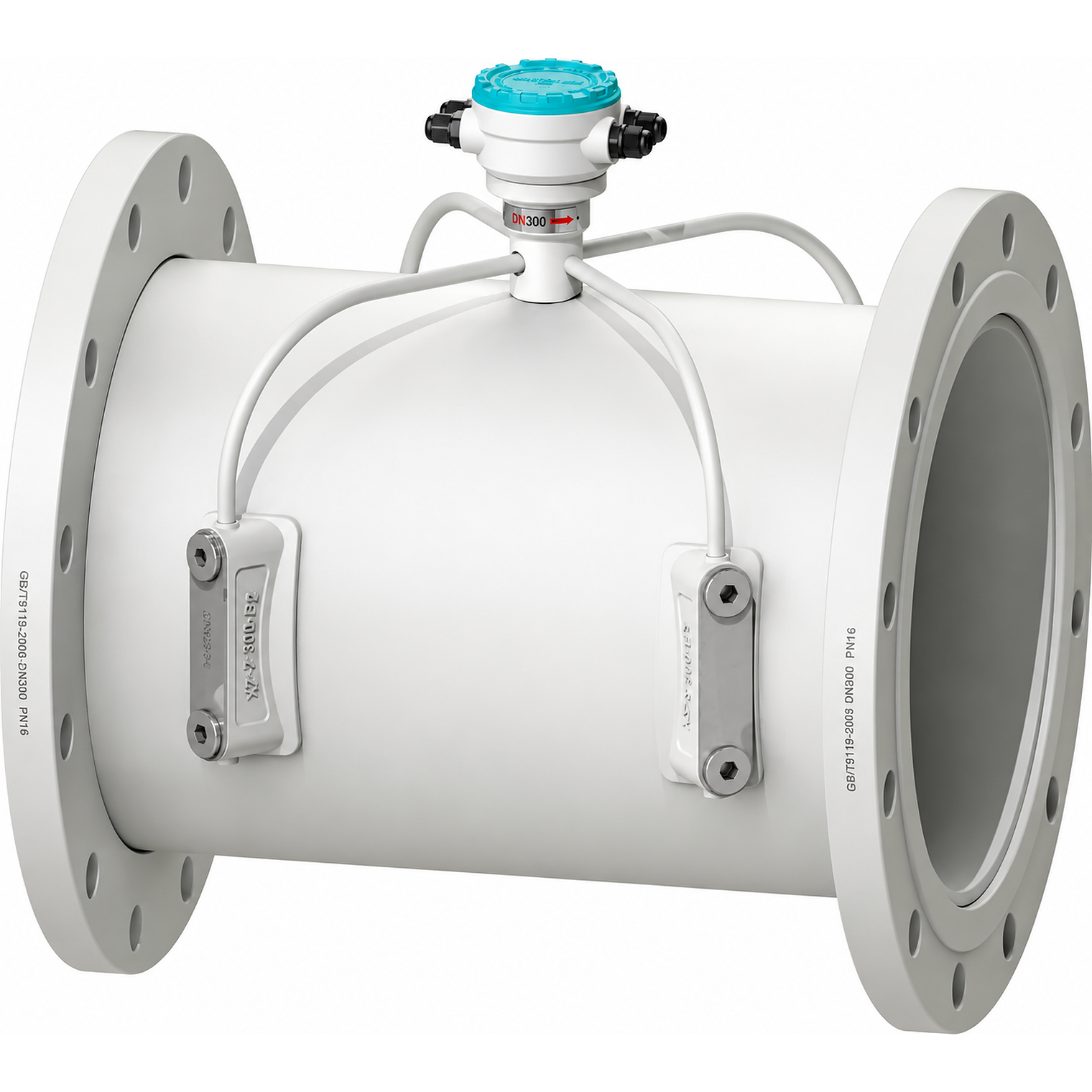
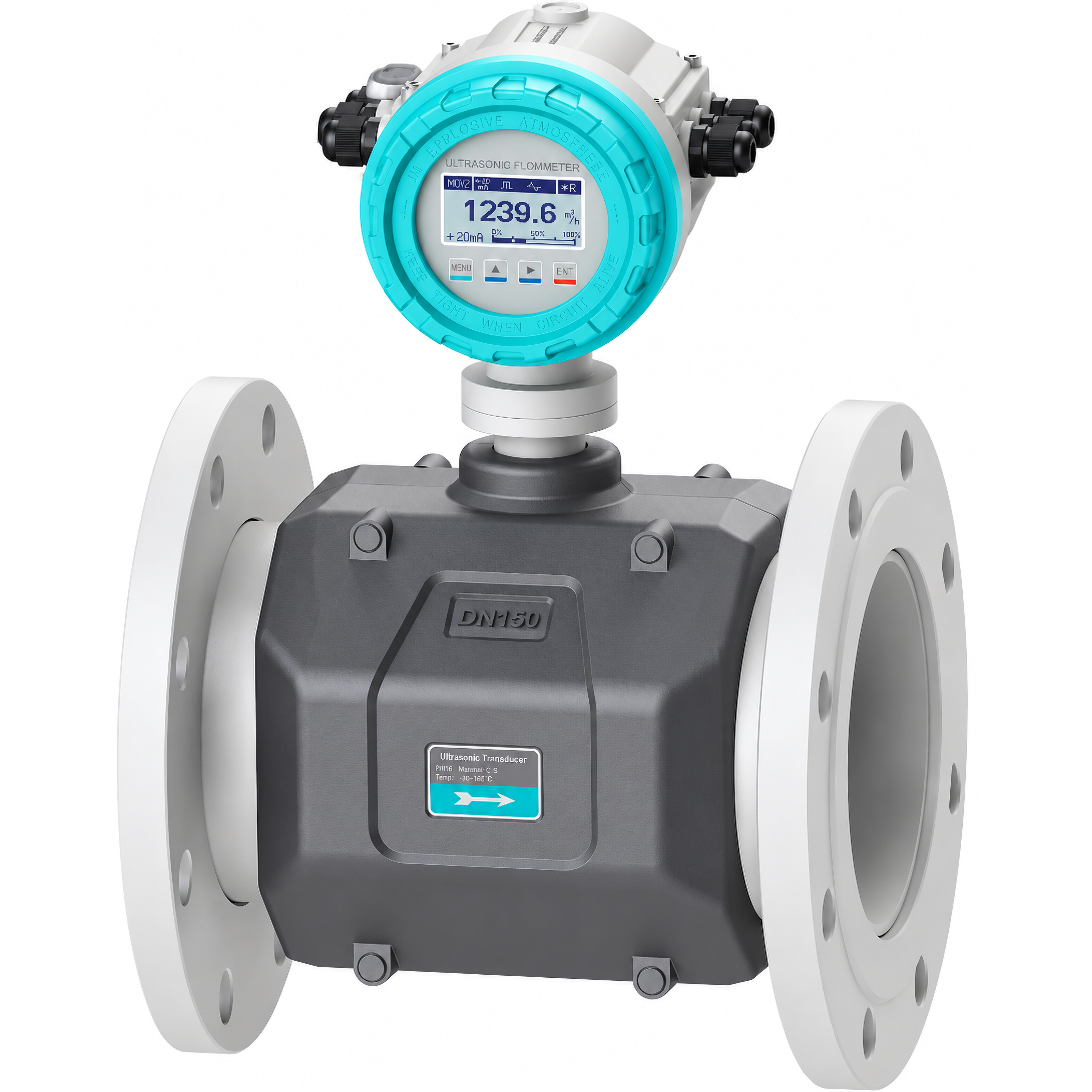
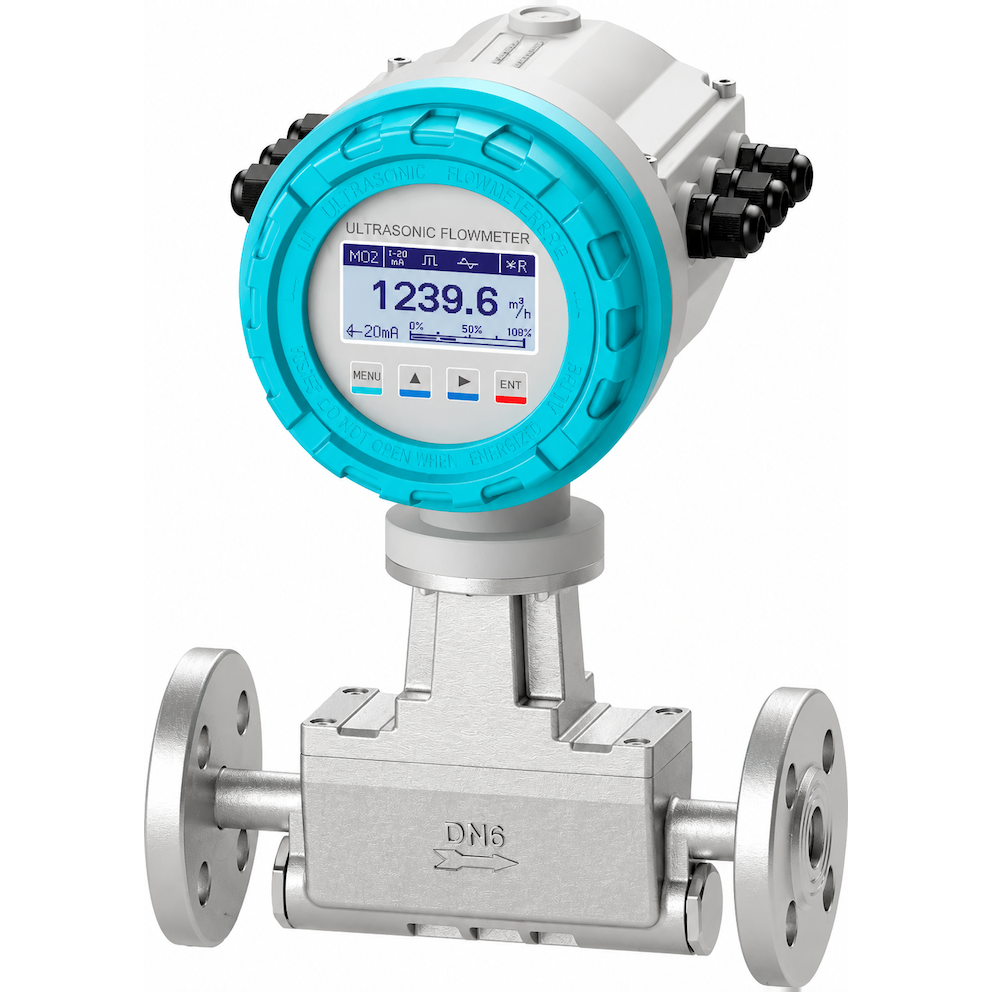
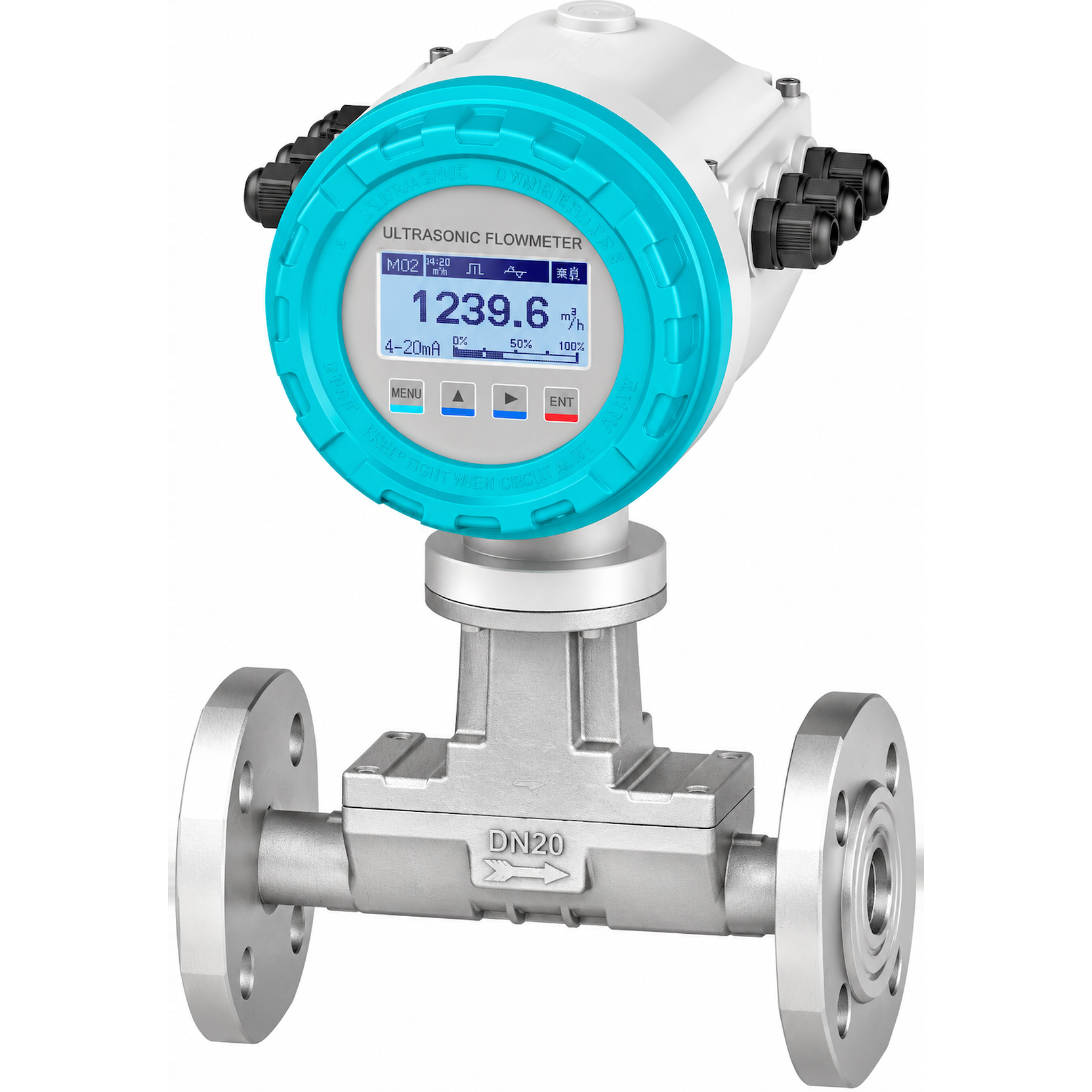
HNF120 is a multi-channel pipe-section ultrasonic flow meter built from a converter and a multi-channel pipe-section transducer, in integrated or split design: the transducer mounts on the pipe, so the measuring section is a section of the line itself. Coverage is DN6–DN2000, with threaded, flanged or quick-connect bodies on micro and small sizes and flanges on large ones; the full-bore design brings no pressure loss and no rotating parts to wear, fluid temperature is −30~160 ℃, and media include water, seawater, sewage, acid and alkaline solutions, alcohol, beer and oils. Channels are one, two or four: ±1% on a single channel, ±0.5% on two and four, with the four-channel version reaching a 0.1 m/s minimum velocity. Converters come as wall mount, module, explosion-proof and panel versions, with 4-20 mA, OCT pulse, relay or frequency outputs, isolated RS485 Modbus, and 3-wire or 4-wire PT100 inputs for heating and cooling metering.
HNF120 is a multi-channel pipe-section ultrasonic flow meter built from a converter and a multi-channel pipe-section transducer, available in integrated and split designs: the transducer mounts directly on the pipe, so the measuring section is a section of the line itself. Coverage is DN6–DN2000, with threaded, flanged or quick-connect bodies on micro and small sizes and flanges on large ones; the full-bore design has no pressure loss and no rotating parts to wear, fluid temperature is −30~160 ℃, and measurable media include water, seawater, sewage, acid and alkaline solutions, alcohol, beer and oils. Channel options are one, two or four: ±1% on a single channel, ±0.5% on two and four, with the four-channel version reaching down to a 0.1 m/s minimum velocity. Converters come as wall mount, module, explosion-proof and panel versions, with 4-20 mA, OCT pulse, relay or frequency outputs, isolated RS485 Modbus, and 3-wire or 4-wire PT100 inputs for heating and cooling metering.
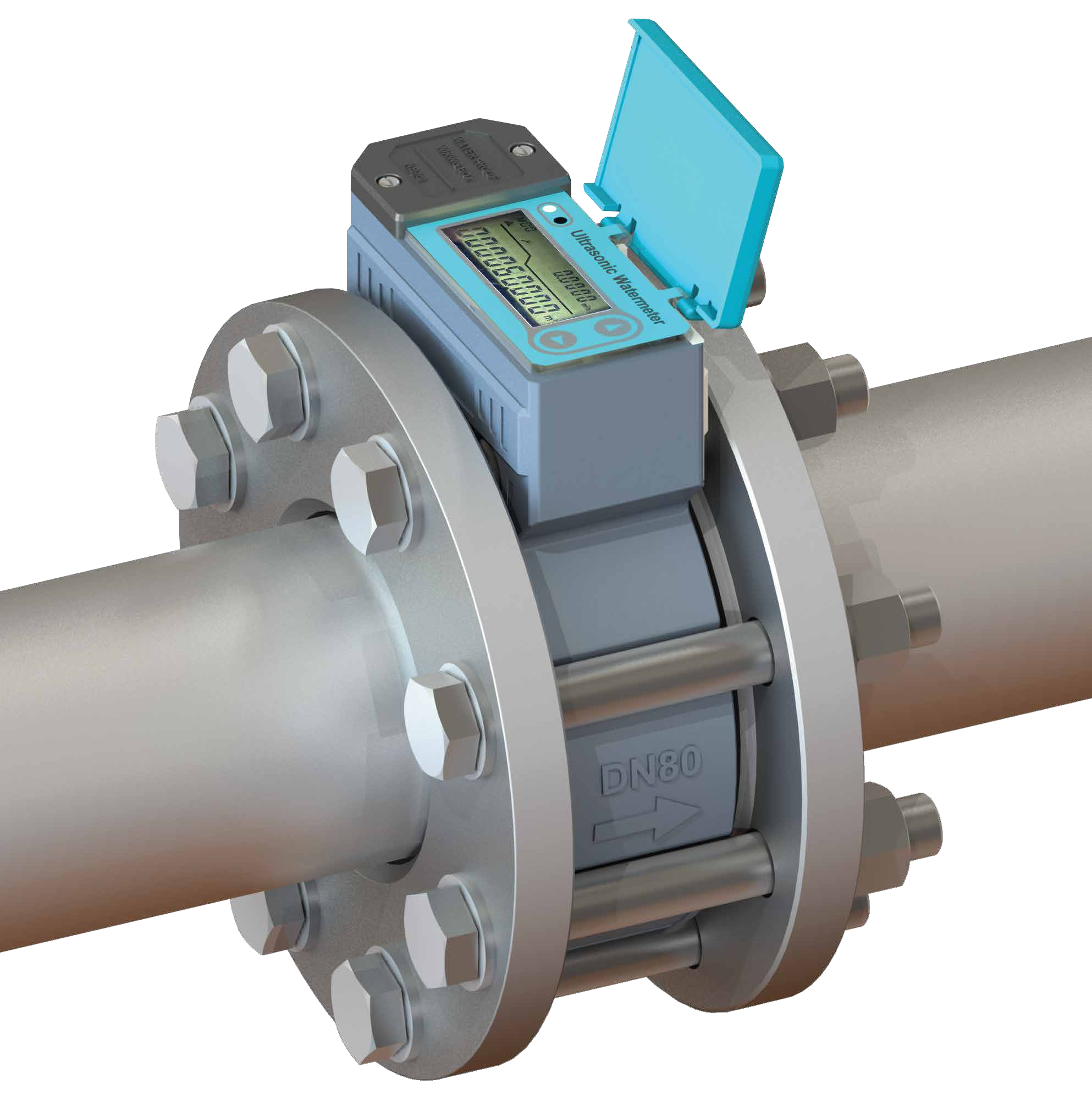
Accuracy comes down to two things: whether the probe takes a stable sample of the real velocity, and whether that sample represents the mean velocity across the pipe. A pipe-section meter puts both inside one body. The multi-channel transducer sits on the measuring spool, with no wall, liner or couplant between probe and fluid, so the signal is not attenuated; the spool is a full-bore design with no reduction and no moving parts, so it adds no pressure loss and cannot drift through impeller wear. Installation is simply bolting the spool flanges to the line, and the straight-run requirement is easier to meet than with a clamp-on meter.
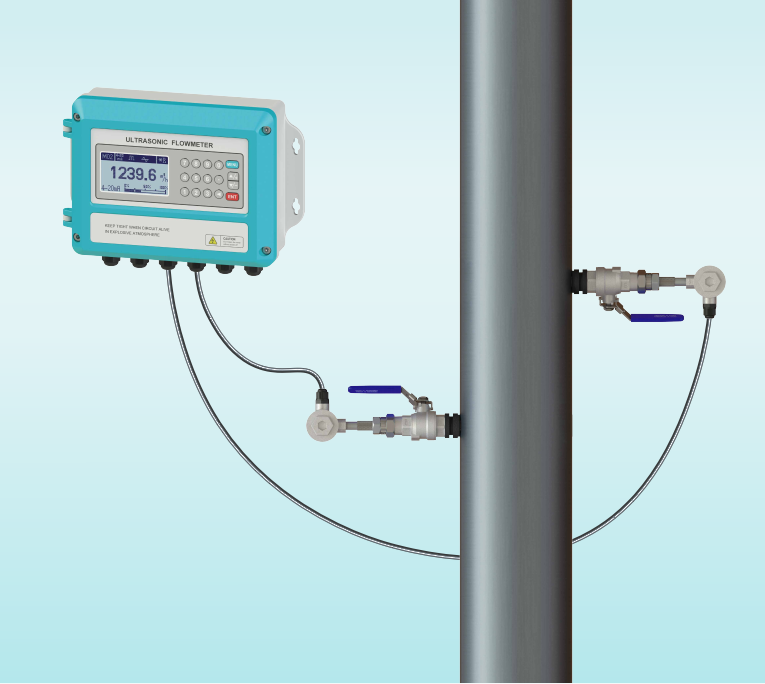
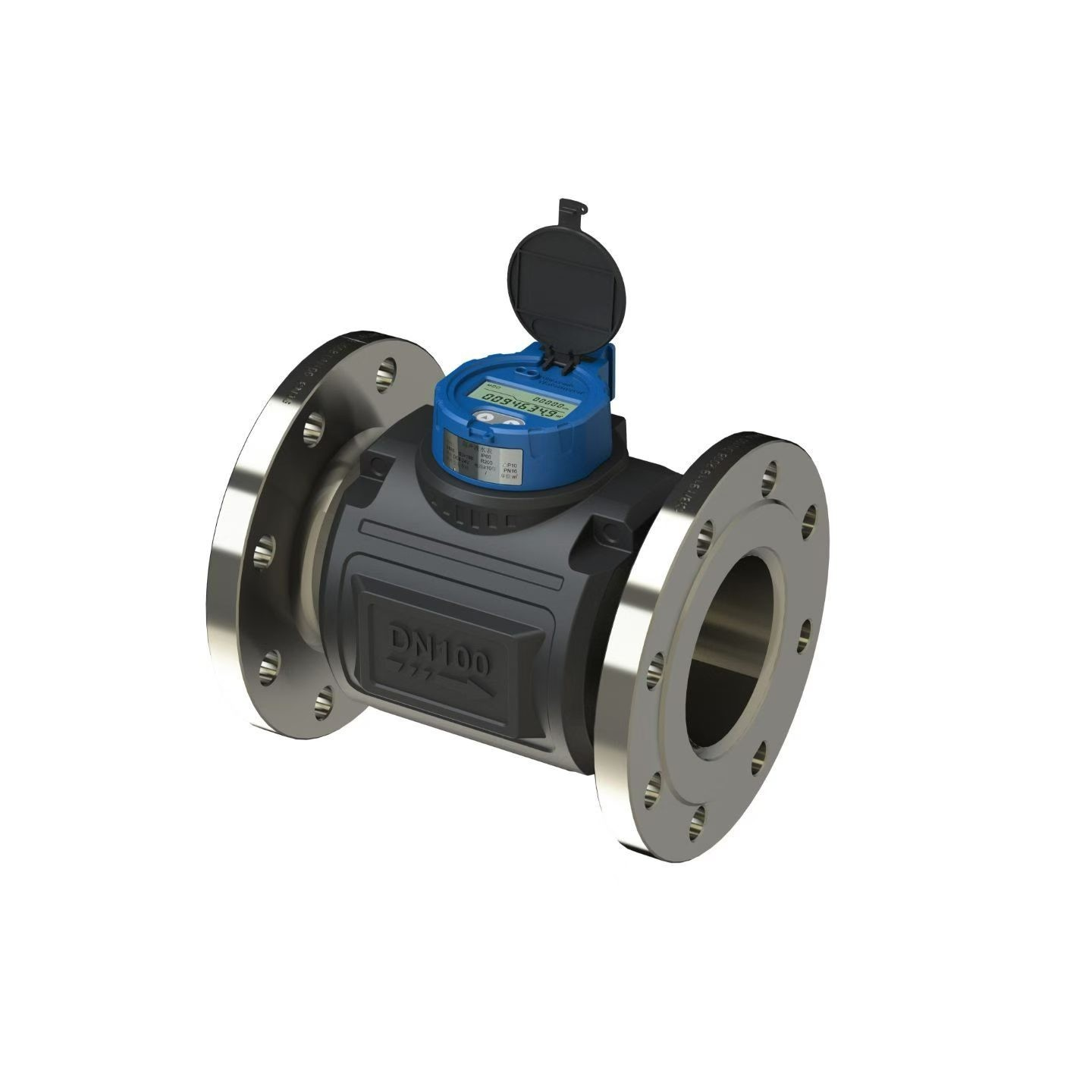
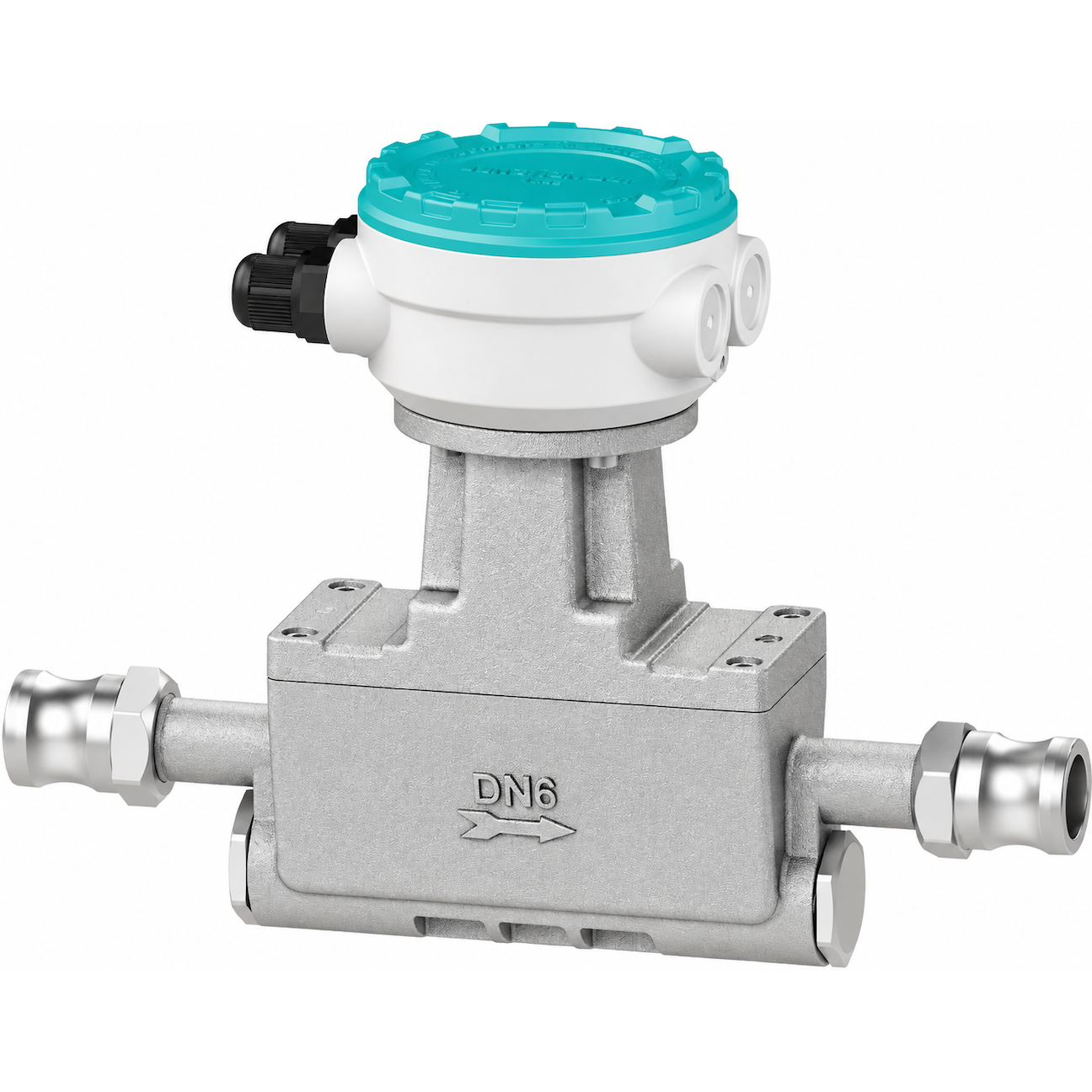
With such a wide size span the construction has to split. Micro and small sizes DN6–DN40 use threaded, flanged or quick-connect bodies, compact enough for dosing, mixing and small-flow branches; DN50 and above use standard flanges, with two- and four-channel versions measuring in layers to bring large-pipe and disturbed-profile error down. The integrated design puts the converter on the body for local reading; the split design moves it to a wall, instrument box or panel, connected to the transducer by a dedicated ultrasonic cable, which suits hot pipes, vibrating locations and cramped space.
Choose this model when all of the following apply:
The pipe is between DN6 and DN2000, covering micro, small and large sizes
Full-bore, no pressure loss is required and no reduction or insertion point can be accepted
The medium is water, seawater, sewage, acid or alkaline solution, alcohol, beer, oil or a comparable single, uniform liquid that conducts ultrasound
Fluid temperature is within −30~160 ℃
Accuracy of ±1% (one channel) or ±0.5% (two or four channels) is needed
4-20 mA / OCT pulse / relay / RS485 Modbus is required, or PT100 sensors for heating and cooling metering
Talk to us first if the medium carries heavy bubbles, suspended solids or is a solid-liquid two-phase flow (ultrasonic beams are scattered); if the pipe exceeds DN2000; if working pressure is above 4.0 MPa on micro and small sizes or above 2.5 MPa on large sizes; if DIN or ANSI flanges are required above DN700 (the catalogue standard is GB/T9119-2010 and JB/T81-94); or if gas metering is needed, since this model is a liquid instrument.
A clamp-on meter transmits through wall, liner and couplant, and wall thickness, rust or an ageing couplant all weaken the signal. On a pipe-section meter the probes mount on the measuring spool and contact the fluid, with no couplant and little long-term drift; the mechanical and electronic sections are separated, so maintenance never means cutting or re-piping the line.
Micro sizes DN6–DN10 and small sizes DN15–DN40 use 304 or 316 stainless bodies with threaded, flanged or quick-connect ends for dosing, mixing and cleaning branches; large sizes DN50–DN2000 use carbon steel or stainless flanged spools with short straight runs and flexible placement, common on trunk mains and custody transfer above DN250.
A single channel measures velocity along one chord, which is enough on a uniform profile; two and four channels sample in layers and average out the disturbance from bends, valves and pumps for ±0.5%. The four-channel version also drops the minimum velocity from ≥0.3 m/s to ≥0.1 m/s, leaving margin for low-flow and wide-turn-down duties.
The integrated converter sits on the body, reading locally with short wiring; the split converter can go on a wall, in an instrument box or a panel, connected by a dedicated cable, which suits hot pipes, vibrating locations and tight spaces. Both designs accept 3-wire or 4-wire PT100 sensors, pairing supply and return temperatures for cooling and heating energy without a separate heat meter.
Model | HNF120 |
Product type | Multi-channel pipe-section ultrasonic flow meter, in integrated and split designs |
Measuring principle | Transit-time (time difference); the upstream and downstream transit-time difference is proportional to velocity |
Channels | One, two or four channels |
Accuracy | ±1% single channel; ±0.5% two and four channels (0.5 class attainable) |
Velocity range | ≥0.3 m/s (one and two channels); ≥0.1 m/s (four channels) |
Pipe diameter | DN6–DN2000 (micro DN6–DN10, small DN15–DN40, large DN50–DN2000) |
Fluid temperature | −30~160 ℃ |
Fluid types | Water, seawater, sewage, acid and alkaline solutions, alcohol, beer, oils and other single, uniform liquids that conduct ultrasound |
Transducer material | Carbon steel, 304 stainless steel, 316 stainless steel (304 / 316 for micro and small sizes) |
Nominal pressure | Micro and small sizes 1.0 / 1.6 / 2.5 / 4.0 MPa selectable; large sizes 1.0 / 1.6 / 2.5 MPa (split large sizes also 0.6 MPa) |
Connection | Micro and small sizes: threaded, flanged or quick connect; large sizes: flanged |
Flange standard | GB/T9119-2010 (DN6–DN600), JB/T81-94 (DN700–DN2000) |
Converter types | Integrated / multi-channel wall mount / wall mount / module / explosion-proof / panel mount |
Converter protection and environment | Integrated IP68; wall mount IP67, ≤85% RH; module IP30, ≤80% RH; explosion-proof IP65, ≤85% RH; panel mount not rated, ≤80% RH; converter temperature −20~60 ℃ |
Transducer protection and temperature | IP68; working temperature equals fluid temperature, −30~160 ℃ |
Display and operation | Large LCD showing flow rate, velocity, total and signal status; navigation menu with four capacitive keys, sixteen keys on the wall mount |
Output signals | 1 × 4-20 mA (impedance 0–1 kΩ at DC 24 V, accuracy 0.1%); 1 × OCT pulse (pulse width 6–1000 ms); 1 × relay or frequency output |
Input signals | 3 × 4-20 mA inputs (usable as a data collector); 3-wire or 4-wire PT100 inputs for cooling and heating energy measurement |
Communication | Isolated RS485 supporting MODBUS |
Power supply | DC 8–36 V; AC 10–30 V; AC 85–264 V (waterproof power adapter optional) |
Explosion protection (explosion-proof converter) | Isolated Exd, class DIIBT4 |
Dimensions | Integrated Φ130 mm, 164 mm length, 158 mm height; wall mount 226 × 172 × 58 mm and 314 × 296 × 95 mm; module 91 × 91 × 28 mm; explosion-proof 342 × 142 × 157 mm; panel mount 96 × 96 × 91 mm |
Confirm five items before ordering:
Size and pressure class — set the body pressure class from the nominal size and working pressure: up to 4.0 MPa on micro and small sizes, up to 2.5 MPa on large sizes.
Connection and flange standard — threaded, flanged or quick connect on micro and small sizes; flanges on large sizes, stating GB/T9119-2010 or JB/T81-94, with DIN or ANSI confirmed separately for export projects.
Channel count and accuracy — one channel for a uniform profile, two or four channels for large pipes and disturbed profiles after bends or pumps.
Integrated or split — split design for hot pipes, vibrating locations or restricted space, moving the converter to a wall or instrument box.
Outputs and functions — the role of 4-20 mA, OCT pulse, relay and RS485 Modbus; whether PT100 sensors are needed for heating and cooling metering.
Installation points: aim for 10D upstream and 5D downstream, and never less than 5D upstream and 3D downstream; align the spool with the line and keep gaskets from protruding into the bore, since a protruding edge disturbs the profile and costs accuracy; the arrow on the body must follow the flow, as a reversed body reads negative or clearly low. Micro spools are small, so avoid excessive torque on welded or threaded joints that could deform the body and affect the acoustic path. Vent the line before commissioning, since measurement only holds on a full pipe; check zero and span against the flow calibration certificate, set the 4-20 mA output to the real range and the pulse weight to the totalising unit. On split versions the dedicated ultrasonic cable must not be lengthened or shortened, and the shield is bonded as specified.
4-20 mA: into a PLC analog input or SCADA for instantaneous flow, with input impedance inside 0–1 kΩ at DC 24 V.
OCT pulse: totalising by pulse weight, feeding flow integrators and energy management platforms.
Relay or frequency output: flow high/low alarms, pump start-stop and batching control.
RS485 Modbus and PT100 inputs: into facility monitoring or energy management, reading flow, total, temperature and cooling or heating energy together.
When connecting to an existing energy platform, send us the protocol and point list; for 4-20 mA, state the range and the PLC input impedance so it stays inside the permitted window.
Plant outlet mains, trunk distribution, pump stations and irrigation lines, mostly two- or four-channel above DN300, with a full-bore body that adds no head loss.
Circulating, cooling and process water and oil lines, where the spool body suits high temperature and continuous operation.
Plant energy metering, district metering and transfer points, where ±0.5% accuracy and no pressure loss suit long-term settlement.
With 3-wire or 4-wire PT100 the meter doubles as a heat and cooling meter for exchanger stations, district cooling and efficiency accounting.
Micro DN6–DN10 and small DN15–DN40 for dosing, mixing, cleaning and test-bench branches, with threaded or quick-connect ends for fast changeover.
The catalogue is a selection sample without a complete ordering code table, so HNF120 is configured from the following fields:
Design: integrated or split (multi-channel wall mount, wall mount, module, explosion-proof or panel converter)
Size and channels: DN6–DN2000; one, two or four channels at ±1% or ±0.5%
Pressure class and material: 1.0 / 1.6 / 2.5 / 4.0 MPa; carbon steel, 304 or 316 stainless
Connection and flange standard: threaded, flanged or quick connect; GB/T9119-2010, JB/T81-94 or a specified standard
Medium and duty: medium name, temperature, pressure, presence of bubbles or suspended solids
Outputs and functions: 4-20 mA, OCT pulse, relay, frequency, RS485 Modbus; PT100 energy metering if required
Example notation: HNF120-4CH-DN200-CS-1.6-F4-20mA-RS485 — four channels, DN200, carbon steel, 1.6 MPa, flanged, 4-20 mA and RS485 output. This notation is indicative; the actual code and field order are confirmed with the order.
No additional loss. The measuring section is full bore with no reduction and no moving parts, its flow path matching the pipe bore, so unlike an orifice plate or turbine it brings no permanent pressure drop, and there is no impeller wear to shift the accuracy.
From the size and the flow field. Below DN50 on a uniform straight run, one channel at ±1% is enough; above DN50, or where the profile is uneven after bends and pumps, use two or four channels for ±0.5%. The four-channel version also drops the minimum velocity from 0.3 m/s to 0.1 m/s, which holds up better at low flow.
Micro and small sizes offer threaded, flanged and quick connections: threads to GB/T7307 (G1/2B on DN6–DN10), flanges to GB/T9119-2010, and quick connects for test benches and mixing branches that are opened often. Bodies are 304 or 316 stainless and rated to 4.0 MPa.
Use the integrated version where the medium is not too hot and the pipe is easy to read and wire, giving local display and simple cabling; use the split version for hot pipes, strong vibration or where the converter cannot sit near the pipe, placing it on a wall, in an instrument box or a panel and connecting it by the dedicated cable.
Yes. The converter accepts 3-wire or 4-wire PT100 inputs, so pairing supply and return temperatures yields heating and cooling energy; three 4-20 mA inputs also bring pressure signals into the same instrument.
HNF120 multi-channel pipe-section ultrasonic flow meter selection sample (PDF)
Contact: HongNuo
Phone: 13840589744
Tel: 86-13840589744
Email: Guiyang.bai@honno-auto. com
Add: Zhongguancun Innovation Center, No. 28 Huahai Road, Shenyang Economic and Technological Development Zone, Liaoning Province
We chat