Guiyang.bai@honno-auto. com
86-13840589744
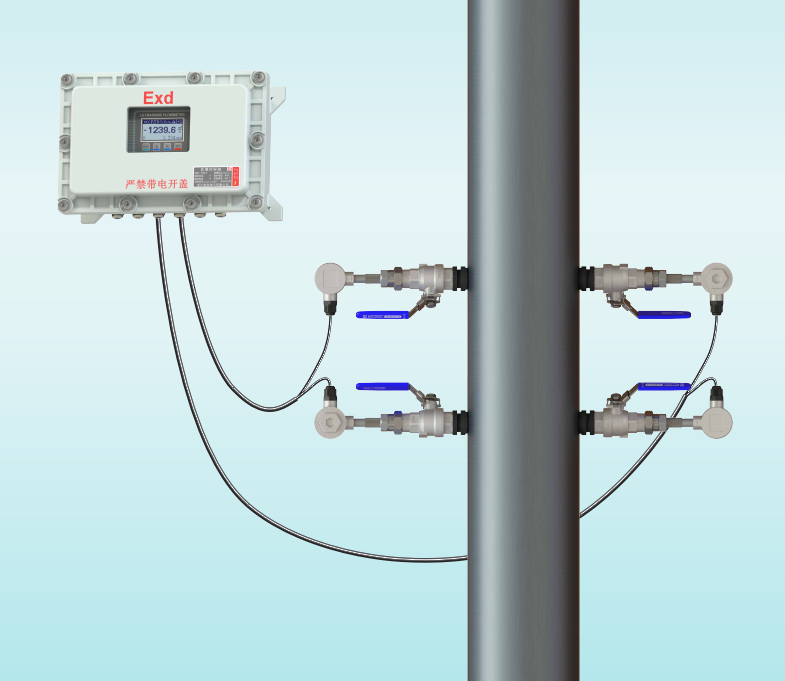
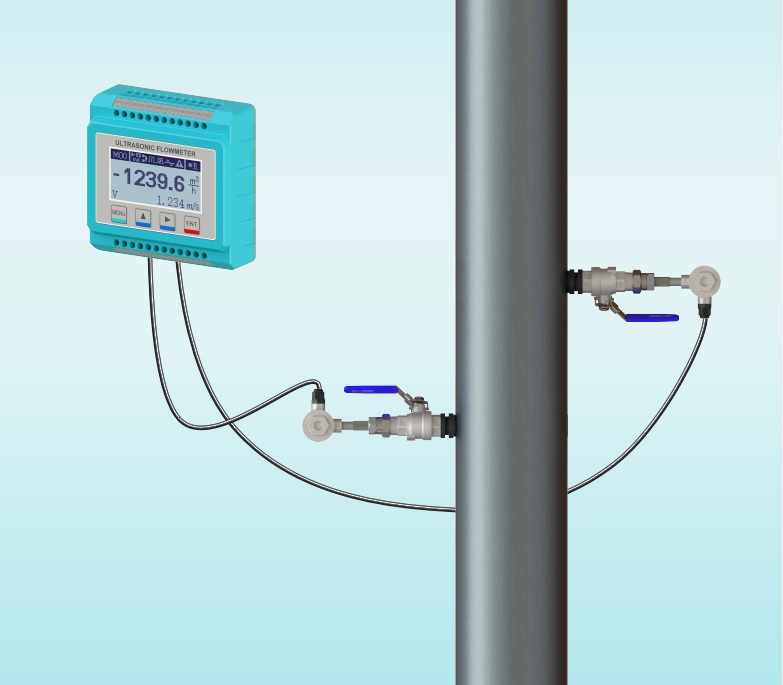
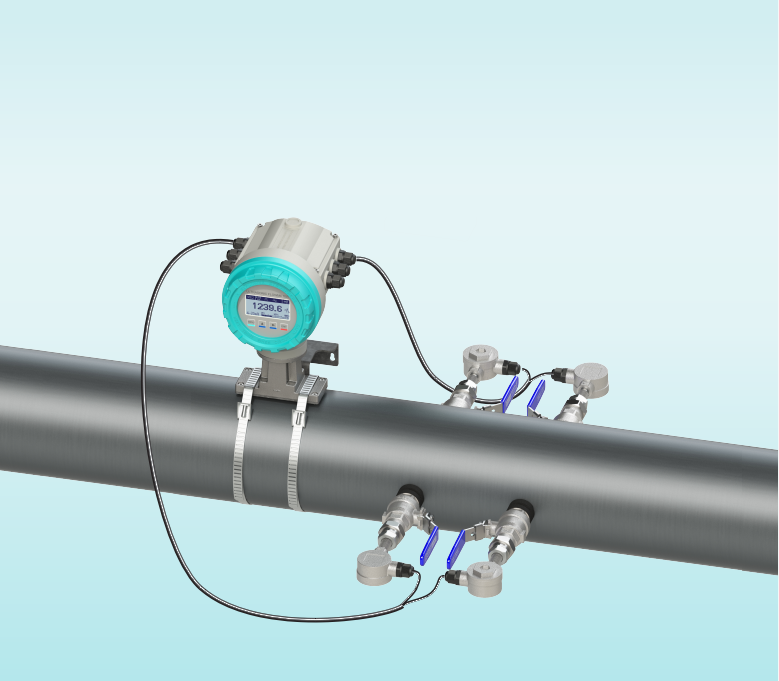
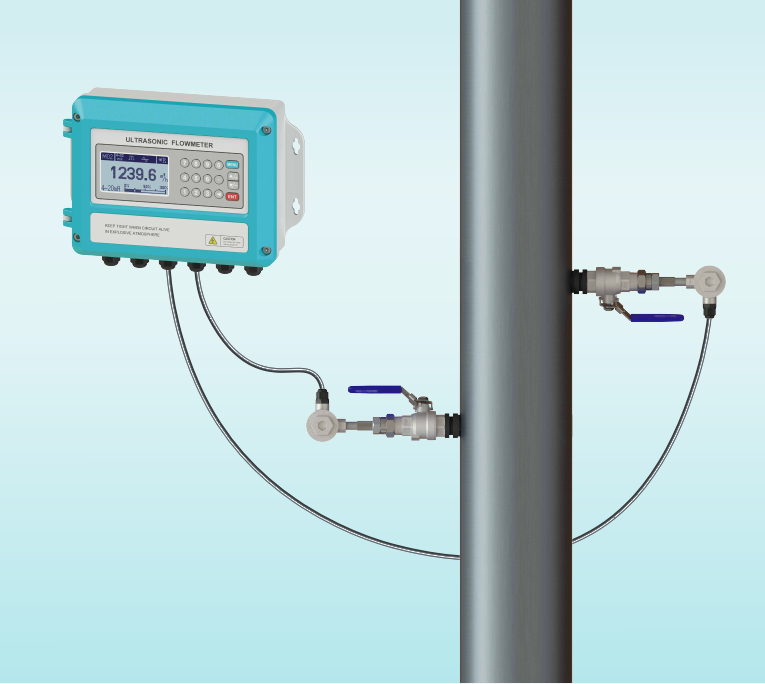
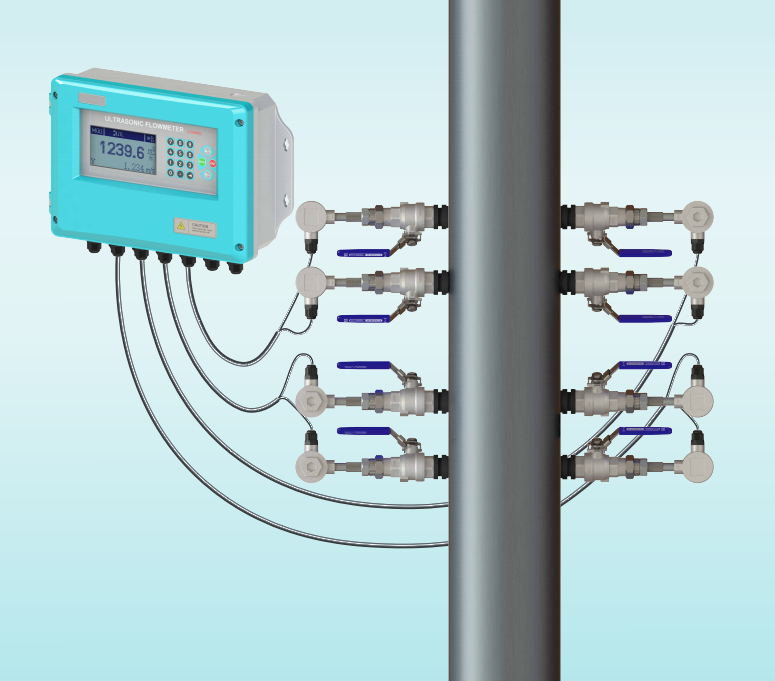
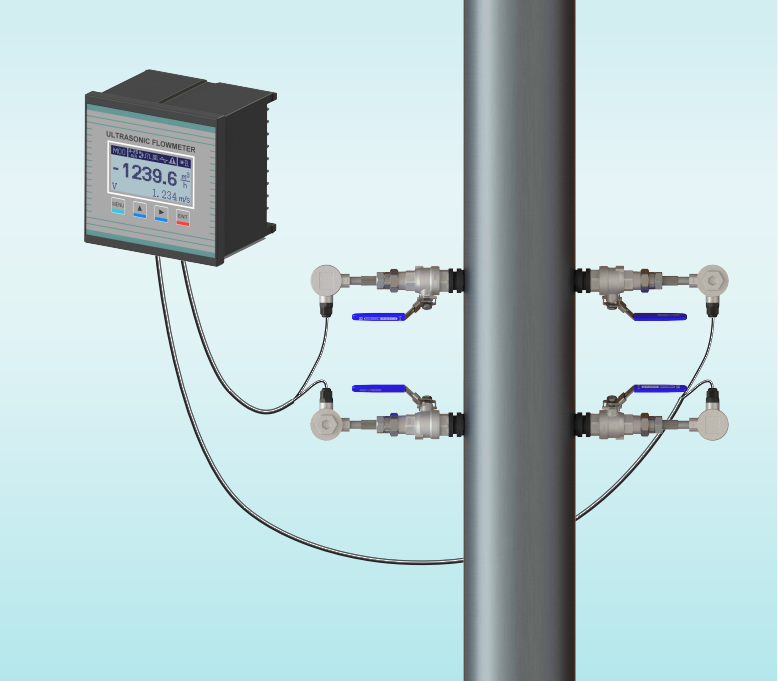
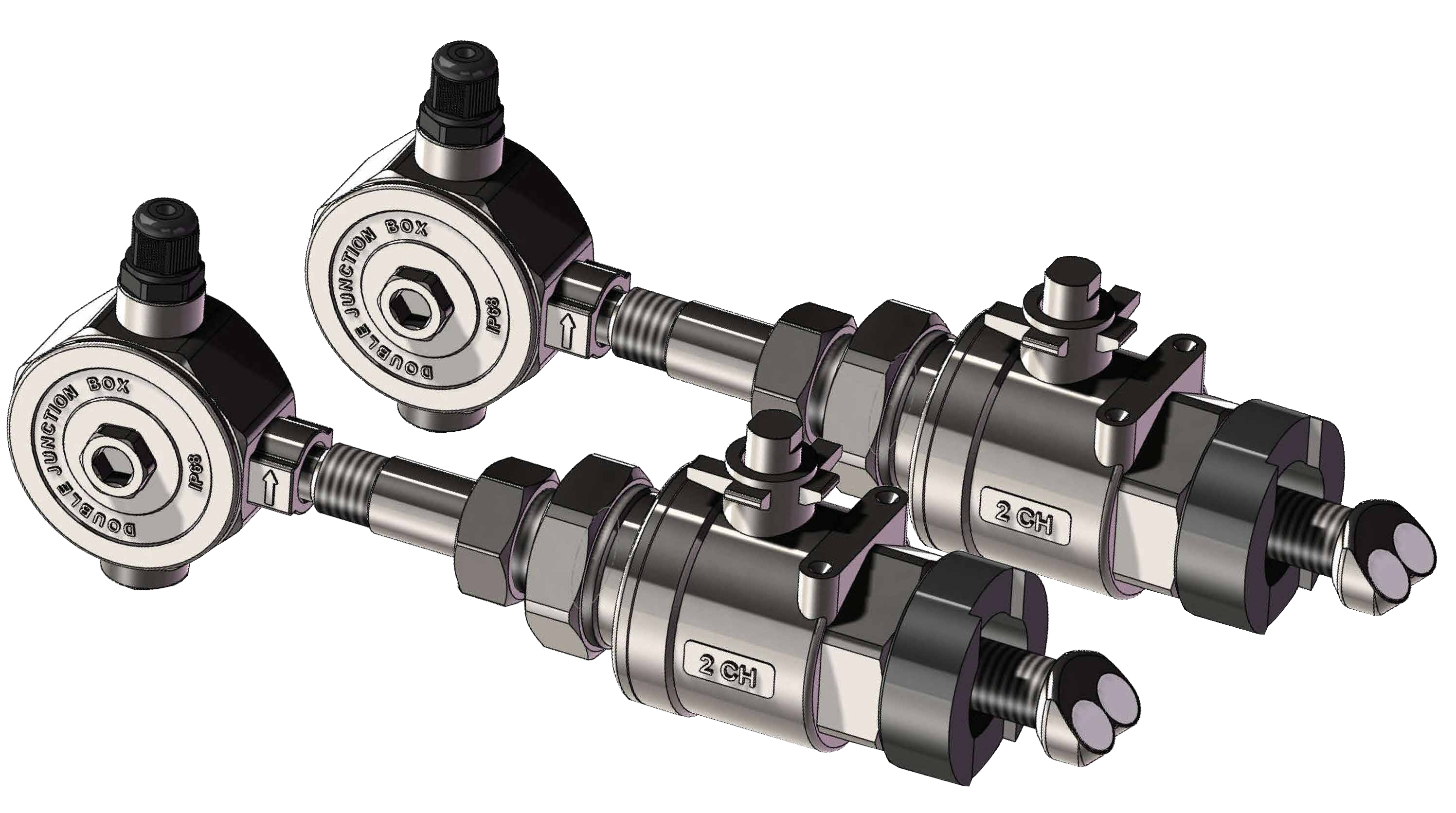
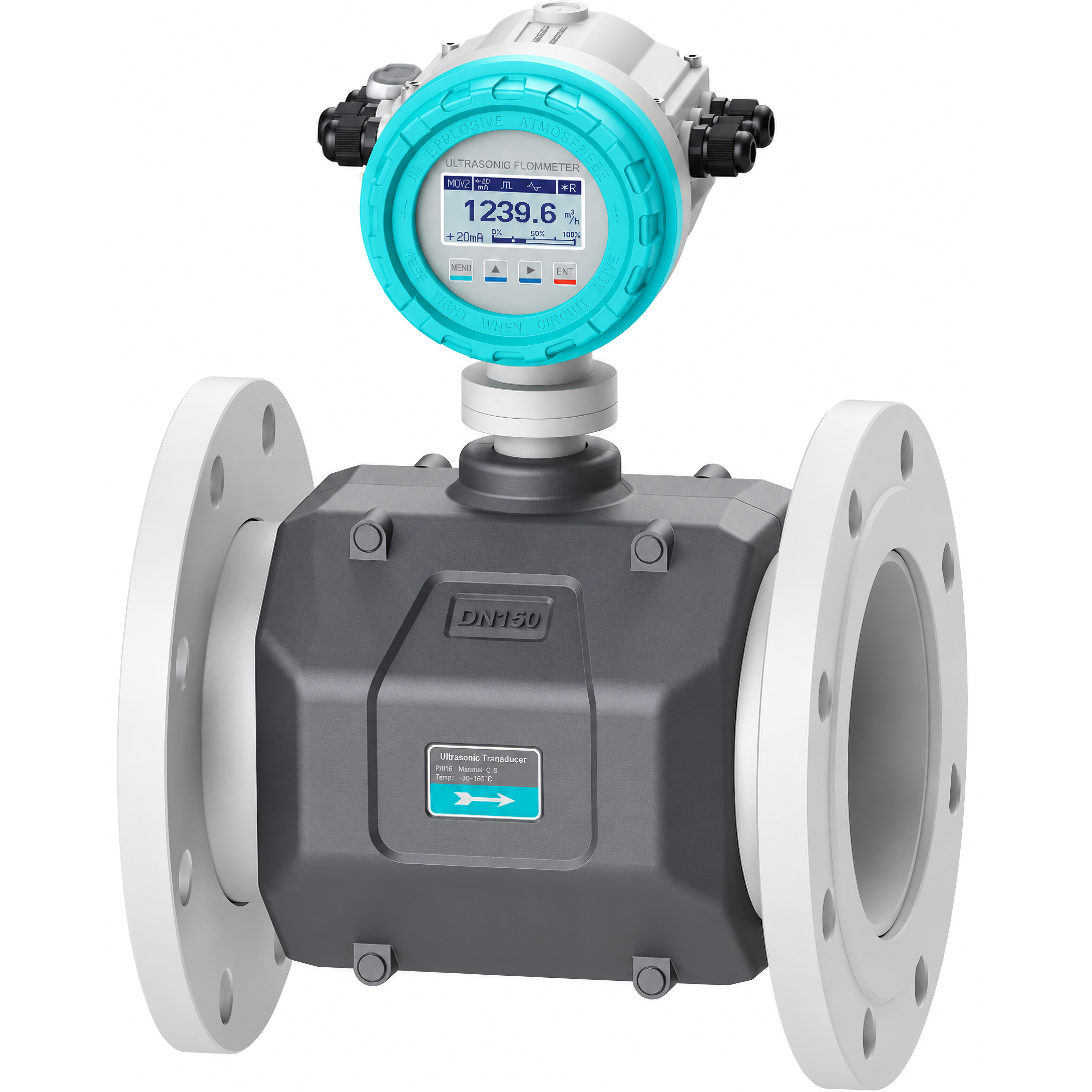
HNF130 is a multi-channel insertion ultrasonic flow meter whose converter and insertion transducers combine freely for one-, two- or four-channel measurement: ±1% on a single channel, ±0.5% on two and four. Probes are fitted through a dedicated hole-cutting tool and contact the fluid directly, so installation needs no shutdown, no reduced bore and no new spool; pipe coverage DN50–DN6000, fluid temperature −30~160 ℃, media including water, seawater, sewage, acid and alkaline solutions, ethanol, alcohol, beer and oils. Converters are available as wall mount, fixed mount, module, panel mount and isolated explosion-proof versions, with 4-20 mA, OCT pulse, relay or frequency outputs, isolated RS485 Modbus, and 3-wire or 4-wire PT100 inputs for heat and cooling metering.
HNF130 is a multi-channel insertion ultrasonic flow meter whose converter and insertion transducers combine freely to deliver one-, two- or four-channel measurement: ±1% on a single channel, ±0.5% on two and four channels. The probe enters the pipe through a dedicated hole-cutting tool and contacts the fluid directly, so the meter is installed without shutting the system down and without reducing the bore or modifying the pipe spool. Pipe coverage is DN50–DN6000, fluid temperature −30~160 ℃, and measurable media include water, seawater, sewage, acid and alkaline solutions, ethanol, alcohol, beer and oils — single, uniform liquids that conduct ultrasound. Converters are available in multi-channel wall mount, wall mount, fixed mount, module, panel mount and explosion-proof versions, with a large LCD showing flow rate, velocity and total. Outputs are 4-20 mA, OCT pulse and relay or frequency, with isolated RS485 Modbus; 3-wire or 4-wire PT100 sensors turn the meter into a heat or cooling meter.
Flow measurement on large pipes runs into three practical constraints: drilling a hole in a live line is expensive to schedule, the line cannot afford a reduced bore, and the site rarely offers a long enough straight run. An insertion design puts the probe through the wall into the fluid, so the sensor contacts the medium directly and the signal does not depend on a coupling layer through the wall; with a dedicated hole-cutting tool the port can be made and the probe fitted while the line stays pressurised, without shutdown or draining. The trade-off is that a single path samples one chord of the velocity profile, so the channel count has to match the pipe and the flow field: a uniform profile from DN50 to DN300 is covered by one channel, while large pipes, disturbed profiles after a bend or a pump call for two or four channels measuring in layers.
HNF130 separates the two jobs. The probe only takes the sample, and the channel count is chosen on site; the converter only computes and outputs, and its form follows the mounting location. One family of probes therefore serves wall mount, fixed mount, module, panel mount and explosion-proof converters, covers DN50 through DN6000, and suits retrofit work and projects commissioned in stages.
Choose this model when all of the following apply:
The pipe is between DN50 and DN6000, or space is so limited that insertion is possible from the top of the pipe only (parallel insertion versions)
Hot-tap installation is required — the line cannot be stopped, drained or shut down
The medium is water, seawater, sewage, acid or alkaline solution, ethanol, alcohol, beer, oil or a comparable single, uniform liquid that conducts ultrasound
Fluid temperature is within −30~160 ℃ and the pipe is carbon steel, stainless steel, cast iron, cement, PVC or composite
Accuracy of ±1% (one channel) or ±0.5% (two or four channels) is needed
4-20 mA / OCT pulse / relay / RS485 Modbus is required, or PT100 sensors for heat and cooling metering
Talk to us first if the medium carries heavy bubbles, suspended solids or is a solid-liquid two-phase flow (ultrasonic beams are scattered and attenuated); if the pipe has a thick liner and a wall beyond 70 mm (the parallel insertion version applies); if gas-proof certification beyond the standard isolated Exd DIIBT4 version is needed; if the pipe is smaller than DN50; or if accuracy better than ±0.5% is required.
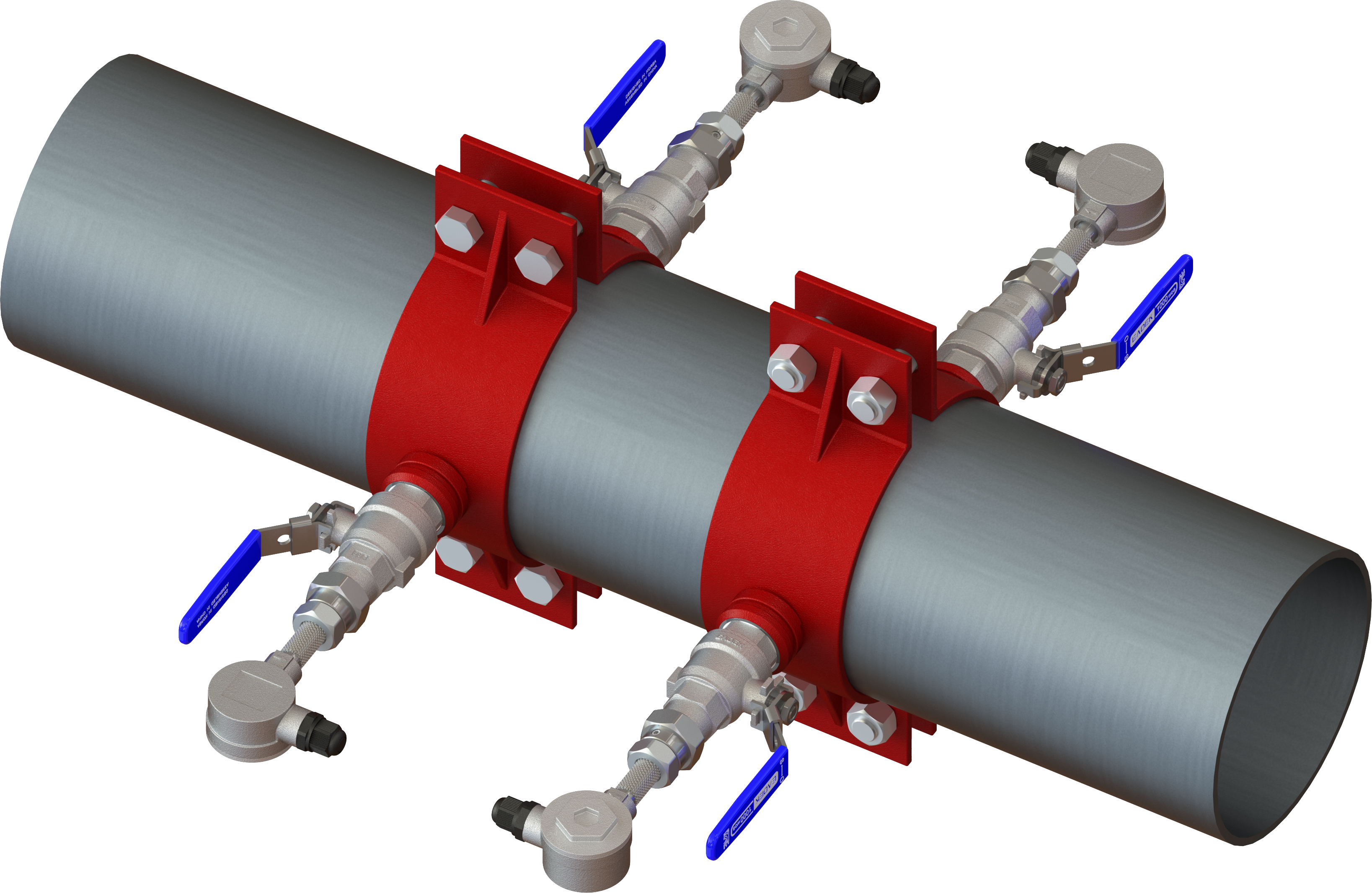
The insertion probe reaches the fluid through a port made in the wall. With the dedicated hole-cutting tool and a pipe clamp, the port can be cut and the probe installed while the line remains pressurised and running, with no draining. Cast iron, cement, PVC, copper and composite pipes cannot be welded, and the clamp solves that too, removing hot work and a second concrete pour.
A single channel measures velocity along one chord, which is enough on a uniform profile. Large pipes and disturbed profiles after bends, valves or pumps need sampling at several points to reconstruct the mean velocity. Two- and four-channel versions measure in layers for ±0.5%, and the minimum velocity drops from ≥0.3 m/s to ≥0.1 m/s, leaving margin for low-flow and wide-turn-down duties.
Because the probe contacts the fluid directly rather than transmitting through the wall and a couplant, wall thickness, rust and light scaling affect the signal far less than with a clamp-on meter. The standard insertion probe covers walls up to 20 mm; the lengthened probe (ATC-2) reaches through walls up to 70 mm, insulation included; the parallel insertion probes (ATP-1 / ATP-2) sit at one third of the pipe diameter, for sites with top access only and unlimited wall thickness.
Connect 3-wire or 4-wire PT100 sensors, pair the supply and return temperatures, and the meter computes heating and cooling energy for district heating, cooling and efficiency accounting without a second heat meter. Three 4-20 mA inputs also let it act as a data collector, bringing pressure and temperature signals into the same upload.
Model | HNF130 |
Product type | Multi-channel insertion ultrasonic flow meter; converter and insertion transducers combine freely |
Measuring principle | Transit-time (time difference); the difference between upstream and downstream transit times is proportional to velocity |
Channels | One, two or four channels |
Accuracy | ±1% single channel; ±0.5% two and four channels (0.5–1% band across channel counts) |
Minimum velocity | ≥0.3 m/s (one and two channels); ≥0.1 m/s (four channels) |
Pipe diameter range | DN50–DN6000; parallel insertion versions (ATP-1 / ATP-2) DN200–DN6000 |
Fluid temperature | −30~160 ℃ |
Measurable media | Water, seawater, sewage, acid and alkaline solutions, ethanol, alcohol, beer, oils and other single, uniform liquids that conduct ultrasound |
Pipe materials | Carbon steel, stainless steel, cast iron, cement, steel, PVC, composite |
Wall thickness | Standard insertion ≤20 mm; lengthened insertion ≤70 mm; parallel insertion unlimited (DN200 and above only) |
Transducer types | Standard insertion ATC-1 / fixed-mount two-channel insertion ATC-1-2 / lengthened insertion ATC-2 / parallel insertion ATP-1 / two-channel parallel insertion ATP-2; stainless probe and probe column |
Converter types | Multi-channel wall mount / wall mount / fixed mount (wall surface or pipe) / module (DIN rail, batch installation in instrument boxes) / panel mount / isolated explosion-proof |
Protection class | Converter IP67 (wall mount); IP68 (fixed mount, panel mount); IP30 (module); IP65 (explosion-proof); transducer IP68 |
Ambient temperature and humidity | Converter −20~60 ℃; humidity ≤85% RH (module ≤80% RH); transducer working temperature equals fluid temperature, −30~160 ℃ |
Display and operation | Large LCD showing instantaneous flow, velocity, total, signal strength and status; navigation menu with sixteen-key keypad on the multi-channel wall mount, four capacitive keys on fixed and panel versions |
Output signals | 1 × 4-20 mA (impedance 0–1 kΩ at DC 24 V, accuracy 0.1%); 1 × OCT pulse (pulse width 6–1000 ms); 1 × relay or frequency output |
Input signals | 3 × 4-20 mA inputs (usable as a data collector); 3-wire or 4-wire PT100 for heating and cooling energy measurement |
Data interface | Isolated RS485 supporting MODBUS |
Power supply | DC 8–36 V; AC 10–30 V; AC 85–264 V |
Memory | Built-in 32 MB (module version stores 2,000 rows); optional USB drive for bulk export |
Explosion protection (explosion-proof converter) | Isolated Exd, class DIIBT4, for flammable and explosive areas |
Dimensions | Multi-channel wall mount 314 × 296 × 95 mm; wall mount 226 × 210 × 58 mm; module 91 × 91 × 28 mm; fixed mount 221 × 154 mm, Φ130 mm; panel mount 96 × 96 × 75 mm |
Confirm five items before ordering:
Pipe size and material — outside diameter, wall thickness, material and any liner; cast iron, cement, PVC and composite pipes need the clamp and cannot be welded.
Channel count — one channel for a uniform profile, two or four channels for large pipes and disturbed profiles after bends or pumps.
Transducer type — standard insertion for walls up to 20 mm, lengthened insertion for 70 mm or insulated pipes, parallel insertion where only top access exists or the wall is very thick.
Converter type — fixed mount for wall or pipe, module for instrument boxes, panel mount for panel fronts, isolated explosion-proof for hazardous areas.
Outputs and functions — the role of 4-20 mA, pulse, relay and RS485 Modbus; whether PT100 sensors are needed for heat or cooling metering.
Installation points: aim for 10D upstream and 5D downstream, and never less than 5D upstream and 3D downstream; mount the probe on the side or the top of the pipe, avoiding the gas pocket at the crown and sediment at the invert; set insertion depth as specified, one third of the pipe diameter for parallel versions. For hot tapping, fit the clamp and the hole-cutting tool first, insert the probe and lock the seal immediately after cutting, and keep tool and valve sealing faces clean throughout; align the probe with the flow arrow, since a reversed probe reads negative or low. At commissioning, confirm signal strength and the sound-velocity ratio are inside the normal band, then check zero and span; set the 4-20 mA output against the real range and the pulse weight against the totalising unit.
4-20 mA: into a PLC analog input or SCADA for instantaneous flow transmission.
OCT pulse: totalising by pulse weight, feeding flow integrators and energy management platforms.
Relay or frequency output: flow high/low alarms, pump start-stop and batching control.
RS485 Modbus: into facility monitoring, energy management systems or gateways, reading flow, total, velocity and temperature.
PT100 and three 4-20 mA inputs: one instrument covers flow, heat or cooling energy and pressure or temperature collection, cutting the instrument count on site.
When connecting to an existing energy platform, send us the protocol and point list; for 4-20 mA, state the range and the PLC input impedance, keeping it inside the 0–1 kΩ limit at DC 24 V.
Plant outlet mains, trunk distribution pipes and district metering points, mostly two- or four-channel above DN300, fitted while the line stays pressurised.
Circulating pump outlets, cooling tower supply and return, and exchanger headers, monitoring flow and energy where scaled pipes still give a better signal than clamp-on.
Sewage lift stations, drainage mains and industrial wastewater lines, with probes in direct contact with media that still conduct ultrasound.
With 3-wire or 4-wire PT100 sensors the meter doubles as a heat and cooling meter for metering and billing in district networks.
Acid, alkaline, ethanol and oil process lines and pump station pressure mains, retrofitted without interrupting production.
The catalogue is a selection sample without a unified ordering code, so HNF130 is configured from the following fields:
Converter type: multi-channel wall mount / wall mount / fixed mount / module / panel mount / isolated explosion-proof
Channels: one, two or four, corresponding to ±1% or ±0.5%
Transducer type: ATC-1 standard insertion / ATC-1-2 fixed-mount two-channel / ATC-2 lengthened insertion / ATP-1 parallel insertion / ATP-2 two-channel parallel insertion
Pipe data: outside diameter, wall thickness, material, liner, straight-run length
Medium and duty: medium name and temperature, presence of bubbles or suspended solids, working pressure
Outputs and functions: 4-20 mA / OCT pulse / relay / frequency / RS485 Modbus; PT100 heat metering and USB export if required
Example notation: HNF130-4CH-ATC-2-DN600-DC24V-RS485 — four channels, lengthened insertion probe, DN600 carbon steel pipe, DC 24 V supply, RS485 Modbus output. This notation is indicative; the actual code and field order are confirmed with the order.
Yes. The insertion probe is fitted through a dedicated hole-cutting tool that drills and inserts under pressure with its own sealing arrangement, so nothing escapes during the job; cast iron, cement, PVC, copper and composite pipes use a pipe clamp instead, also without hot work. The prerequisites are a wall thick enough to take the port, a suitable location, and a medium temperature and pressure within the probe rating.
From the pipe size and the flow field. DN50 to DN300 with an adequate straight run and a uniform profile is served by one channel at ±1%; above DN300, or after bends, valves and pumps where the velocity profile is clearly uneven, use two or four channels for ±0.5% and a minimum velocity that drops from 0.3 m/s to 0.1 m/s.
First check the probe against the wall and liner: beyond 20 mm switch to the lengthened probe (up to 70 mm), and beyond that, or where only top access exists, use the parallel version. If it is still weak, verify the insertion depth is correct, that the probe face is not fouled, and that there is no gas layer in the pipe. Signal strength and the sound-velocity ratio must be read together.
The lengthened probe (ATC-2) simply extends the sensor to reach through thick walls, insulation and large pipes, still mounted normal to the wall; the parallel version (ATP-1 / ATP-2) runs the probe along the wall at one third of the pipe diameter, for sites with top access only or walls too thick for normal mounting, and requires DN200 or larger.
Yes. The converter accepts 3-wire or 4-wire PT100 inputs, and with supply and return temperature sensors it computes heating and cooling energy; three 4-20 mA inputs also bring pressure and temperature into the same instrument.
HNF130 multi-channel insertion ultrasonic flow meter selection sample (PDF)
Contact: HongNuo
Phone: 13840589744
Tel: 86-13840589744
Email: Guiyang.bai@honno-auto. com
Add: Zhongguancun Innovation Center, No. 28 Huahai Road, Shenyang Economic and Technological Development Zone, Liaoning Province
We chat